

DR.Victoria Austin
-
 October 12, 2026Published On: October 12, 2026Updated On: October 12, 2026Categories: erectile dysfunctionRead More
Imagine struggling with erectile dysfunction (ED) and discovering a treatment that may help improve erectile function without relying on a pill every time you want intimacy. For many men exploring modern sexual health options, this possibility is one reason shockwave therapy is attracting attention.
Erectile dysfunction affects more than sexual performance. It can influence confidence, relationships, emotional well-being, and overall quality of life. Although medications such as sildenafil and tadalafil help many men, they are not suitable for everyone, and some patients continue searching for additional treatment options.
-
 October 10, 2026Published On: October 10, 2026Updated On: October 13, 2026Categories: erectile dysfunctionRead More
Imagine a patient arriving at an emergency department with chest pain, shortness of breath, and a racing heartbeat- every second matters. The medical team must assess the symptoms, review the patient's history, interpret diagnostic tests, and decide what to do next, all while other patients wait for care.
Now imagine digital systems helping clinicians organize patient information, flag concerning patterns, interpret medical images, and identify patients who may need urgent attention.
This is the growing reality of modern emergency medicine. Digital health technology is changing Erectile Dysfunction diagnosis by helping healthcare professionals access clinical information, recognize potential risks, and make more informed diagnostic decisions.
From artificial intelligence (AI)
-
 October 06, 2026Published On: October 06, 2026Updated On: October 13, 2026Categories: erectile dysfunctionRead More
Imagine if your smartphone could help your doctor see patterns in your health that you might not notice yourself.
Your phone already tracks steps, sleep, heart rate, exercise, and sometimes blood pressure or other health measurements through connected devices. But could this everyday health information also help doctors understand erectile dysfunction (ED)?
The answer is potentially yes, but with an important limitation. Smartphone health data cannot diagnose erectile dysfunction on its own. However, when combined with medical history, symptoms, laboratory tests, physical examination, and information from wearable devices, patient-generated health data may give healthcare professionals additional context about factors that can influence
-
 September 30, 2026Published On: September 30, 2026Updated On: October 13, 2026Categories: erectile dysfunctionRead More
Imagine a doctor being able to spot a man's rising risk of erectile dysfunction months or potentially years before the problem becomes impossible to ignore.
Instead of waiting for a patient to bring up an uncomfortable subject, an artificial intelligence system could analyze routine health information, identify subtle patterns, and alert a clinician that something deserves a closer look.
That future is no longer purely theoretical.
Researchers are already investigating artificial intelligence (AI), machine learning, predictive analytics, routine blood tests, clinical questionnaires, imaging, and other health data as potential tools for detecting and predicting erectile dysfunction
-
 September 17, 2026Published On: September 17, 2026Updated On: October 09, 2026Categories: erectile dysfunctionRead More
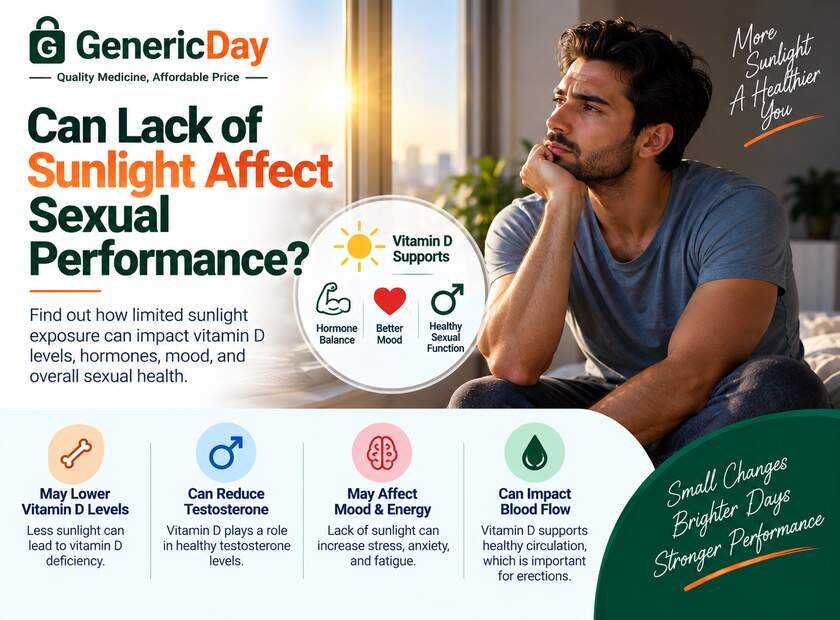
Quick Answer: Low sunlight exposure may indirectly affect sexual performance by contributing to low vitamin D levels and influencing sleep, mood, and overall health. However, lack of sunlight is not established as a direct cause of erectile dysfunction.
What if something as simple as spending too little time in the sun could be connected to your sexual health?
It may sound surprising, but sunlight plays an important role in the body's production of vitamin D, and vitamin D is involved in several processes related to overall health. Researchers have investigated whether low vitamin D levels are associated with erectile dysfunction, testosterone levels, libido, blood-vessel health, mood, and other factors that can influence
-
 September 14, 2026Published On: September 14, 2026Updated On: September 29, 2026Categories: erectile dysfunctionRead More
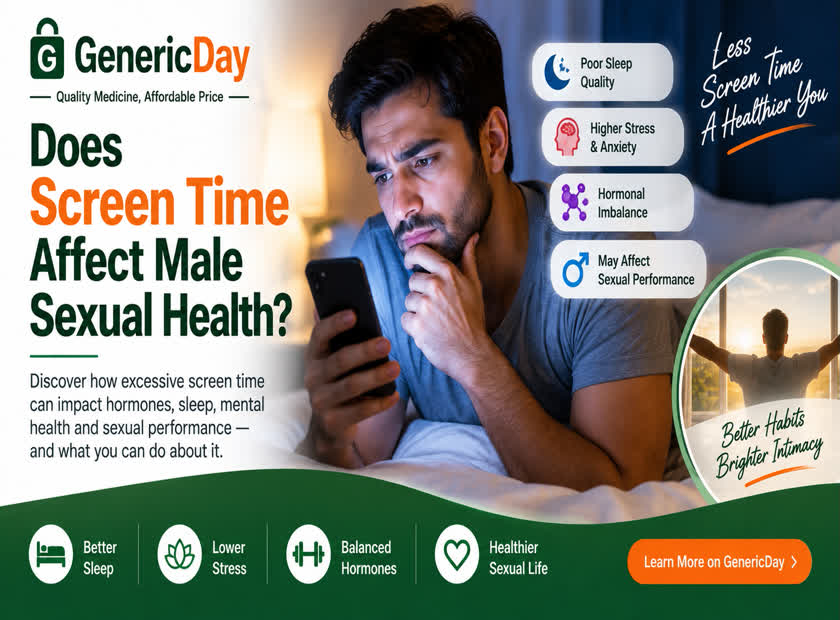
Quick Answer: Excessive screen time may affect male sexual health indirectly by contributing to poor sleep, physical inactivity, stress, and sedentary habits. Reducing screen time and maintaining healthy sleep and activity levels can support overall sexual wellbeing.
Does Screen Time Affect Male Sexual Health? What Science Says About Screen Time, Testosterone, ED & Fertility
Your phone may be sitting beside you while you read this, but could your screen habits also be affecting your sexual health?
For many men, screens are part of almost every hour of the day. We use smartphones for work, laptops for study, television for entertainment, and social media before bed. The problem is not simply the number of
-
 September 11, 2026Published On: September 11, 2026Updated On: September 29, 2026Categories: erectile dysfunctionRead More
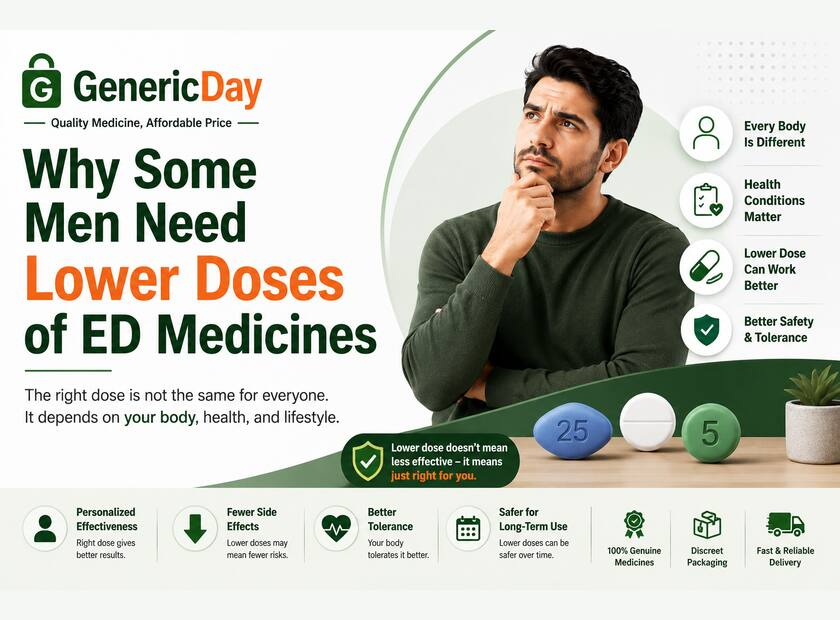
Quick Answer: Some men may need lower doses of ED medicines because of age, health conditions, medication interactions, or greater sensitivity to side effects. The appropriate dose should be determined with guidance from a healthcare professional.
Erectile dysfunction (ED) medicines have helped millions of men improve their sexual function, but there is no universal dose that works exactly the same way for everyone. One man may respond well to a standard dose, while another may experience strong side effects from the same amount and need a lower dose.
So, why do some men need lower doses of ED medicine?
The answer is usually a combination of factors such as age, kidney and liver function, other
-
 September 10, 2026Published On: September 10, 2026Updated On: September 29, 2026Categories: erectile dysfunctionRead More
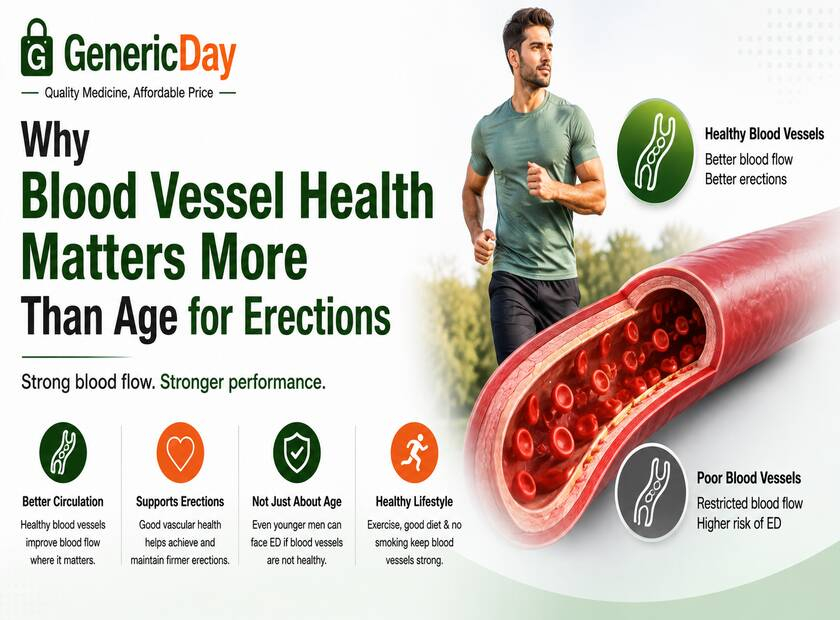
Quick Answer: Healthy blood vessels are essential for proper blood flow to the penis and can support stronger erections. Conditions such as high blood pressure, diabetes, high cholesterol, and smoking can affect vascular health and contribute to erectile dysfunction.
Why Blood Vessel Health Matters More Than Age for Erections
Getting older does not automatically mean you have to accept weaker erections.
That is one of the biggest misconceptions about male sexual health.
While age can increase the likelihood of erectile changes,
-
 September 09, 2026Published On: September 09, 2026Updated On: September 29, 2026Categories: erectile dysfunctionRead More
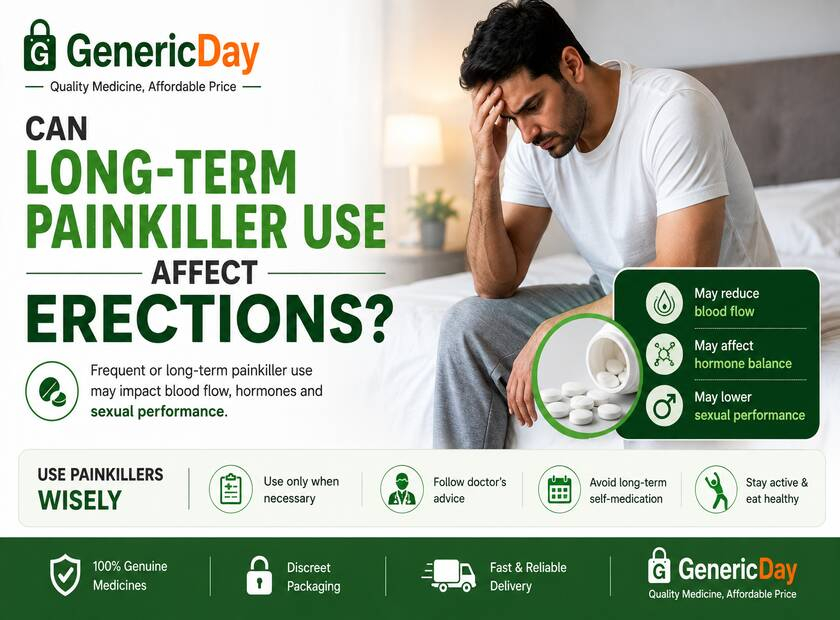
Quick Answer: Long-term use of some painkillers may be associated with erectile difficulties through hormonal, vascular, or other health effects. If you notice persistent changes in erectile function, discuss your medication use and symptoms with a healthcare professional.
Can long-term painkiller use affect erections? Yes, in some men, prolonged use of certain pain medications particularly opioids may contribute to erectile dysfunction (ED), reduced libido, or other forms of sexual dysfunction. However, painkillers are not the only possible cause. Chronic pain itself, hormonal changes, stress, poor sleep, underlying health conditions, and other medications can also affect sexual function.
-
 September 03, 2026Published On: September 03, 2026Updated On: October 09, 2026Categories: erectile dysfunctionRead More
Quick Answer: Erections may feel different after recovering from an illness due to fatigue, stress, medication effects, hormonal changes, or reduced physical activity. As recovery continues, erectile function may gradually return to its usual pattern.
What if erectile dysfunction is not just a problem that starts in the bedroom?
For many men, difficulty achieving or maintaining an erection is often linked with stress, aging, low testosterone, or relationship concerns. While these factors can certainly play a role, erectile dysfunction (ED) may sometimes be connected to something less obvious: the overall health of the body's blood vessels and metabolism.


