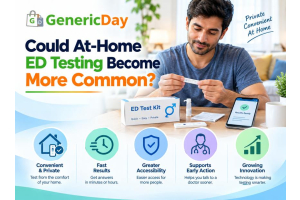
Could At-Home ED Testing Become More Common?

Quick Answer: At-home erectile dysfunction (ED) testing may make it easier to monitor erection patterns and identify potential health concerns privately. Digital tools and home-based tests could complement medical evaluations, but they cannot replace a doctor's diagnosis. Consult a healthcare professional for accurate assessment and appropriate treatment.
Imagine being able to take the first step toward understanding your sexual health from the privacy of your own bedroom without the anxiety of scheduling an appointment or discussing an uncomfortable concern face-to-face. For millions of men experiencing erection difficulties, this possibility could change how they approach healthcare.
Erectile dysfunction (ED) is more than an occasional difficulty getting or maintaining an erection. It can affect confidence, relationships, emotional well-being, and overall quality of life. Yet many men delay seeking help because of embarrassment, limited access to specialists, time constraints, or concerns about privacy.
As digital healthcare, home-based diagnostics, and telehealth consultations continue to develop, an important question emerges: Could at-home Erectile Dysfunction testing become more common?
The answer is likely yes, particularly for preliminary assessments, remote consultations, and selected diagnostic procedures. However, wider adoption will depend on medical accuracy, affordability, patient trust, regulatory oversight, and the ability to identify underlying health conditions.
At-home erectile dysfunction testing is not a single technology or universal diagnostic solution. It includes several approaches, from online symptom questionnaires to specific home-based tests and laboratory sample collection. Understanding these differences is essential for evaluating what the future of Erectile Dysfunction testing might look like.
What Is At-Home ED Testing?
At-home Erectile Dysfunction testing refers to methods that allow men to begin evaluating erectile difficulties or complete certain diagnostic procedures without making an initial in-person visit to a healthcare facility.
Depending on the service or test, the process may involve answering questions about sexual function, collecting a biological sample, monitoring nighttime erections, or consulting a qualified healthcare professional online.
However, not every home-based assessment can diagnose erectile dysfunction or determine its underlying cause.
According to the National Institute of Diabetes and Digestive and Kidney Diseases (NIDDK), healthcare professionals diagnose Erectile Dysfunction by considering medical, sexual, and mental health history, physical examination findings, and appropriate laboratory or other tests.
At-home testing may support parts of this process, but a complete evaluation can require additional medical assessment.
Common Types of At-Home ED Testing
| Testing method | What it can assess | Important limitation |
|---|---|---|
| Online ED questionnaire | Symptoms and reported erectile function | Cannot independently confirm the cause |
| Home blood sample collection | Selected hormones or metabolic markers, depending on the service | Results require appropriate clinical interpretation |
| Nocturnal erection testing | Erections occurring during sleep | Specialized testing may be needed; results are not definitive alone |
| Telehealth assessment | Symptoms, medical history, and treatment needs | Some patients still require an in-person examination |
| Home health monitoring | Selected health measurements relevant to overall risk | Does not directly diagnose Erectile Dysfunction |
The key distinction is that at-home Erectile Dysfunction assessment is not the same as a complete medical diagnosis. Some methods gather useful information, while others measure specific biological indicators that must be interpreted in context.
Why Could At-Home ED Testing Become More Common?
Several developments could encourage more men to explore home-based erectile dysfunction testing in the coming years.
1. Greater Privacy and Reduced Embarrassment
- Privacy is one of the strongest potential advantages of at-home Erectile Dysfunction testing.
- Sexual health remains a sensitive subject for many people. Some men worry about being judged by healthcare professionals, discussing intimate concerns, or explaining their symptoms in a crowded clinical setting.
- These concerns may lead to delayed diagnosis and missed opportunities to identify treatable conditions.
- A confidential online assessment or home-based test could make the first step feel more manageable. Men may be more comfortable recording their symptoms privately before discussing them with a qualified clinician.
- Digital healthcare can also allow patients to complete medical questionnaires at a convenient time and prepare questions before a consultation.
- However, privacy depends on more than being physically at home. Patients should understand how healthcare providers store medical information, protect personal data, and share results with laboratories or other service providers.
2. Convenience and Easier Access to Healthcare
- Traditional diagnostic pathways can require appointments, travel, waiting rooms, laboratory visits, and follow-up consultations.
- For people living far from urologists or specialist clinics, these steps can become significant barriers.
- At-home Impotence testing could reduce some of this burden by allowing patients to complete preliminary assessments online, arrange eligible sample collection, or discuss results through telehealth.
- This approach may be especially useful for people with demanding work schedules, mobility limitations, or limited access to specialist services.
- Nevertheless, convenience should not come at the expense of medical quality. A service that provides quick answers but fails to investigate relevant symptoms may leave important health concerns unresolved.
3. Growth in Telehealth and Digital Healthcare
- Telehealth has created new ways for patients to discuss sexual health concerns with healthcare professionals.
- Through secure digital platforms, patients may complete an intake questionnaire, describe symptoms, review medical history, and receive advice about appropriate next steps.
- A peer-reviewed study published in Sexual Medicine examined six direct-to-consumer websites offering erectile dysfunction evaluation and treatment. Between late 2017 and late 2019, their combined quarterly visitor count increased substantially. The study demonstrates historical demand for online Impotence services, although website traffic does not establish diagnostic quality or prove that home testing itself is becoming more common.
- This distinction matters. Online Erectile Dysfunction consultations and at-home diagnostic tests are related developments, but they are not interchangeable.
- Telehealth could make Impotence care more accessible even when the actual diagnosis still requires blood tests, a physical examination, or specialized testing.
4. Increasing Awareness of Men's Sexual Health
- Public discussion of men's health has expanded through educational websites, online communities, healthcare campaigns, and digital consultations.
- Greater awareness may encourage men to recognize persistent erectile difficulties as a legitimate health concern rather than something they must simply tolerate.
- Erectile dysfunction can be associated with several factors, including cardiovascular disease, diabetes, hormonal abnormalities, medication effects, psychological stress, and other health conditions.
- A convenient initial assessment may encourage patients to seek professional advice earlier.
- At-home testing could therefore become part of a broader shift toward preventive healthcare, earlier symptom recognition, and more personalized medical support.
How Does At-Home Erectile Dysfunction Testing Work?
The process depends on the assessment method and the provider offering it.
Some services focus on symptom questionnaires, while others combine remote medical consultations with laboratory testing or specialized diagnostic procedures.
Step 1: Complete a Symptom Assessment
- An online erectile dysfunction assessment may ask questions about the frequency of erection difficulties, the ability to maintain an erection, sexual desire, symptom duration, and how symptoms affect daily life.
- Validated questionnaires, including the International Index of Erectile Function and its shorter versions, can help healthcare professionals assess symptom severity and monitor changes over time.
- These questionnaires provide structured information, but they do not replace clinical judgment.
- Occasional erection difficulties can occur for many reasons. Persistent symptoms deserve attention, especially when they represent a noticeable change from a person's usual sexual function.
Step 2: Review Medical History and Risk Factors
- A clinician may ask about existing medical conditions, prescription medications, supplements, tobacco use, alcohol consumption, sleep quality, and mental health.
- This information helps identify possible contributing factors.
- For example, diabetes and high blood pressure may affect blood vessels and nerve function. Stress, depression, and relationship difficulties may also influence sexual performance.
- A remote assessment is most useful when it gathers relevant information systematically rather than relying on a short symptom checklist alone.
Step 3: Complete Appropriate Tests if Recommended
- Depending on the clinical situation, a healthcare professional may recommend blood tests, hormone evaluation, or specialized investigations.
- A home blood collection service may be available in some locations, but the tests offered, sample collection process, and laboratory standards vary.
- Testing for testosterone, blood glucose, or other markers may help investigate particular causes of Impotence when clinically appropriate.
- Importantly, a single laboratory result does not automatically explain erectile difficulties. Results must be interpreted alongside symptoms, medical history, and other findings.
Step 4: Review Results With a Qualified Healthcare Professional
- The final step is understanding what the findings mean and deciding whether additional evaluation is needed.
- A clinician may recommend lifestyle changes, medication review, further diagnostic tests, psychological support, or appropriate Erectile Dysfunction treatment.
- Some patients can be evaluated and managed effectively through telehealth. Others require an in-person examination or specialist referral.
- A reliable at-home Erectile Dysfunction testing pathway should make these next steps clear.
Are At-Home ED Tests Accurate and Reliable?
The accuracy of at-home Erectile Dysfunction testing depends on what the test measures, how it is performed, and whether its results are interpreted appropriately.
There is no single accuracy figure that applies to every online questionnaire, home laboratory service, or nighttime erection monitoring device.
Understanding the Difference Between Screening and Diagnosis
An online assessment may identify symptoms consistent with erectile dysfunction, but it cannot necessarily establish why those symptoms occur.
Similarly, a blood test may measure a hormone level accurately without proving that the hormone is responsible for a patient's symptoms.
This distinction is important because Impotence can involve multiple contributing factors.
For example, a person may experience erection difficulties associated with cardiovascular health, medication use, anxiety, hormonal problems, or a combination of these factors.
A test that measures only one variable may provide useful information while leaving other explanations unresolved.
What About At-Home Nighttime Erection Testing?
Nocturnal penile tumescence and rigidity testing evaluates erections that occur during sleep.
Depending on the method, monitoring may take place at home or in a sleep laboratory. Specialized devices can record features such as erection frequency, duration, and rigidity.
The NIDDK describes nighttime erection testing as one investigation healthcare professionals may use when evaluating ED.
However, the results must be interpreted carefully. Sleep quality, age, psychological factors, and other circumstances can influence findings.
Normal nighttime erections do not automatically rule out every cause of sexual difficulties, and abnormal results do not independently establish a specific diagnosis.
What Makes a Home Test Trustworthy?
Before choosing an at-home Erectile Dysfunction testing service, consider whether it clearly explains what is measured, how results are validated, who interprets the findings, and when medical follow-up is recommended.
Consumers should also check the applicable regulatory status of any diagnostic product. Regulatory requirements differ between countries and between types of tests.
The US Food and Drug Administration provides guidance on direct-to-consumer tests, including the importance of understanding test limitations and discussing results with healthcare professionals.
A trustworthy service should avoid exaggerated claims, guaranteed diagnoses, and suggestions that one test can identify every possible cause of erectile dysfunction.
The Role of Artificial Intelligence and Wearable Technology
Artificial intelligence and connected health devices could influence how future Impotence assessments are delivered.
However, their potential should be distinguished from proven clinical capabilities.
AI-Assisted Symptom Assessment
AI-supported healthcare tools may help organize patient-reported symptoms, identify missing information, and direct users toward relevant educational resources.
For example, a digital assessment could prompt a user to describe symptom duration, medication history, sleep concerns, or known medical conditions.
Such tools may make the initial assessment more structured.
However, AI-generated guidance should not be treated as a confirmed diagnosis. Systems may misunderstand information, overlook important risk factors, or produce inaccurate recommendations.
Clinical oversight remains essential, especially when symptoms may indicate a broader medical problem.
Wearables and Remote Monitoring
Wearable devices already measure certain aspects of general health, including activity, sleep, and heart rate. Future research may explore whether additional digital measurements can contribute to sexual health assessment.
Specialized nighttime erection monitoring is also a distinct area of medical testing.
Nevertheless, a consumer smartwatch or ordinary fitness tracker should not be assumed to diagnose erectile dysfunction. Evidence would be needed to demonstrate that a particular device measures clinically relevant variables reliably and improves patient care.
Personalized Digital Healthcare
One potential future model combines patient questionnaires, selected laboratory tests, remote consultations, and follow-up monitoring.
Rather than offering the same testing package to everyone, a clinician could recommend investigations based on symptoms and medical history.
This approach could reduce unnecessary testing while helping patients access appropriate care.
Its success will depend on clinical validation, responsible data handling, integration with healthcare services, and evidence that it improves outcomes.
What Are the Main Benefits of At-Home Impotence Testing?
At-home Erectile DYsfunction testing could offer several advantages when used appropriately.
Greater Accessibility
Home-based assessments may help people begin seeking care when travel, work schedules, mobility issues, or specialist shortages make traditional appointments difficult.
Earlier Recognition of Symptoms
An accessible screening or assessment pathway could encourage men to discuss persistent erection difficulties before they become more disruptive.
Improved Patient Comfort
Completing an initial questionnaire in a familiar environment may reduce anxiety and help patients explain their concerns more clearly.
Potentially More Efficient Follow-Up
Remote consultations and digital records may make it easier to review symptoms, discuss test results, and coordinate further investigations.
Better Patient Engagement
Digital tools can help patients understand the relationship between sexual function and broader health factors, potentially encouraging more informed conversations with clinicians.
These benefits are possibilities rather than guarantees. They depend on the quality of the service, the needs of the patient, and access to appropriate follow-up care.
What Challenges Could Limit the Growth of At-Home ED Testing?
Despite its potential, at-home erectile dysfunction testing faces several important barriers.
1. Diagnostic Limitations
No single home assessment can identify every possible cause of Erectile Dysfunction.
Some patients require a physical examination, specialized imaging, additional blood tests, or evaluation of underlying medical conditions.
A service that overstates what its test can establish may create false reassurance or unnecessary anxiety.
2. Privacy and Data Security
Sexual health information is sensitive. Digital platforms must handle personal details, medical records, test results, and payment information responsibly.
Patients should review privacy policies, understand how their data may be shared, and use secure communication channels.
3. Cost and Availability
Home testing may be convenient, but it is not necessarily cheaper than traditional care.
Costs can include consultations, sample collection, laboratory processing, device fees, and follow-up appointments.
Availability also varies by country, region, healthcare system, and regulatory requirements.
4. Medical Oversight
Direct-to-consumer services may make access easier, but convenience alone does not guarantee appropriate medical care.
A 2022 review of direct-to-consumer telemedicine in urology noted concerns about adherence to established clinical guidelines in some ED services and highlighted the need for further research.
Reliable services should use appropriate clinical assessments, explain the limits of remote evaluation, and refer patients for in-person care when needed.
5. Patient Understanding
A test report containing unfamiliar medical terminology may be difficult to interpret without guidance.
Patients need clear explanations of what a result means, what it cannot establish, and what action—if any—should follow.
Accessible information and professional follow-up will be essential for building trust in home-based diagnostics.
Could At-Home Impotence Testing Become More Common in the Future?
At-home Impotence testing could become more common as digital healthcare becomes more integrated into routine medical services.
The most plausible development is not that every man will diagnose erectile dysfunction independently. Instead, home-based assessment may become a more accessible entry point into a broader diagnostic pathway.
In this model, patients could complete symptom questionnaires online, consult healthcare professionals remotely, arrange selected laboratory tests, and receive follow-up guidance through secure digital platforms.
Patients who need specialized investigations would still be referred to appropriate clinics.
Several developments could influence adoption over time:
-
Better digital assessment tools: More structured symptom collection and easier communication with clinicians.
-
Improved home diagnostics: Validated tests that measure specific clinically relevant indicators.
-
Wider telehealth access: More opportunities to consult qualified healthcare professionals remotely.
-
Greater health awareness: Increased recognition that persistent erectile difficulties deserve medical attention.
-
Stronger quality standards: Clearer rules for testing claims, data protection, professional oversight, and follow-up.
However, these developments will not necessarily progress at the same speed in every market.
Future adoption will depend on clinical evidence, affordability, regulation, patient confidence, and whether home-based services deliver meaningful improvements in healthcare access and outcomes.
The strongest long-term model is likely to combine the convenience of home-based tools with the expertise of qualified healthcare professionals.
When Should You See a Doctor for Erectile Dysfunction?
At-home Erectile Dysfunction testing can be a useful starting point, but persistent erection difficulties should not be ignored.
Consider seeking medical advice if you regularly struggle to get or maintain an erection, notice a sudden change in sexual function, experience reduced sexual desire alongside other symptoms, or have conditions such as diabetes, high blood pressure, or cardiovascular disease.
Erectile Dysfunction may sometimes be associated with underlying health problems that require attention beyond sexual function alone.
A clinician can review medications, assess relevant risk factors, and determine whether laboratory testing or additional investigations are appropriate.
Do not start prescription Erectile Dysfunction medication, stop an existing medicine, or change a prescribed dose solely on the basis of an online assessment or home test result.
Seek emergency medical care for a painful erection lasting four hours or longer.
Most importantly, erectile dysfunction is a common and often treatable health concern. Seeking professional advice is a practical step toward understanding its cause and choosing an appropriate treatment.
Frequently Asked Questions
1. Could at-home Impotence testing become more common?
Yes, home-based assessments and telehealth may become more widely used because they can improve convenience, privacy, and access to initial healthcare evaluations.
2. Can you test for erectile dysfunction at home?
You can complete symptom questionnaires and, in selected circumstances, specific home-based diagnostic tests, but a healthcare professional may be needed to confirm the diagnosis and identify its cause.
3. Are at-home Impotence tests accurate?
Accuracy varies by test type, and no single accuracy figure applies to all home assessments; results should be interpreted in their clinical context.
4. What is the best at-home impotence test?
There is no universally best test because the appropriate assessment depends on symptoms, medical history, and the specific question a healthcare professional needs to investigate.
5. Can a blood test identify the cause of erectile dysfunction?
Blood tests can help identify certain contributing factors, such as hormonal abnormalities or metabolic conditions, but they cannot explain every case of ED.
6. Can telehealth diagnose erectile dysfunction?
A qualified healthcare professional may evaluate and manage many cases through telehealth, although some patients need physical examinations or additional diagnostic procedures.
7. Is at-home Impotence testing private?
Home testing can offer greater privacy, but confidentiality depends on the provider's data security practices, privacy policies, and handling of medical information.
8. Can AI diagnose erectile dysfunction at home?
AI tools may support symptom assessment and health education, but they should not replace a qualified clinician's diagnostic judgment.
9. Does erectile dysfunction always indicate a serious health problem?
No, but persistent Impotence can sometimes be associated with underlying medical conditions, so professional evaluation is worthwhile.
10. When should you seek medical help for Erectile Dysfunction?
Seek medical advice for persistent or concerning erection difficulties, and obtain emergency care for a painful erection lasting four hours or longer.
Conclusion: The Future of At-Home Impotence Testing
At-home Erectile Dysfunction testing could become more common, but its future will depend on combining convenience with reliable medical care.
Digital questionnaires, remote consultations, selected home-based diagnostic procedures, and improved laboratory access could make it easier for men to begin addressing erectile difficulties privately and conveniently.
These approaches may reduce barriers to care, encourage earlier conversations, and help patients navigate the diagnostic process.
Nevertheless, a home assessment cannot automatically identify every underlying cause of erectile dysfunction. Accurate diagnosis may require a medical history, physical examination, laboratory testing, or specialized investigations.
The most promising future is therefore a hybrid approach: patients gather information and complete suitable assessments at home, while qualified healthcare professionals interpret the findings and recommend appropriate next steps.
As technology advances and evidence improves, at-home Erectile Dysfunction testing may become an increasingly useful part of men's healthcare—not as a replacement for medical expertise, but as a more accessible route toward it.