Can Long-Term Painkiller Use Affect Erections?
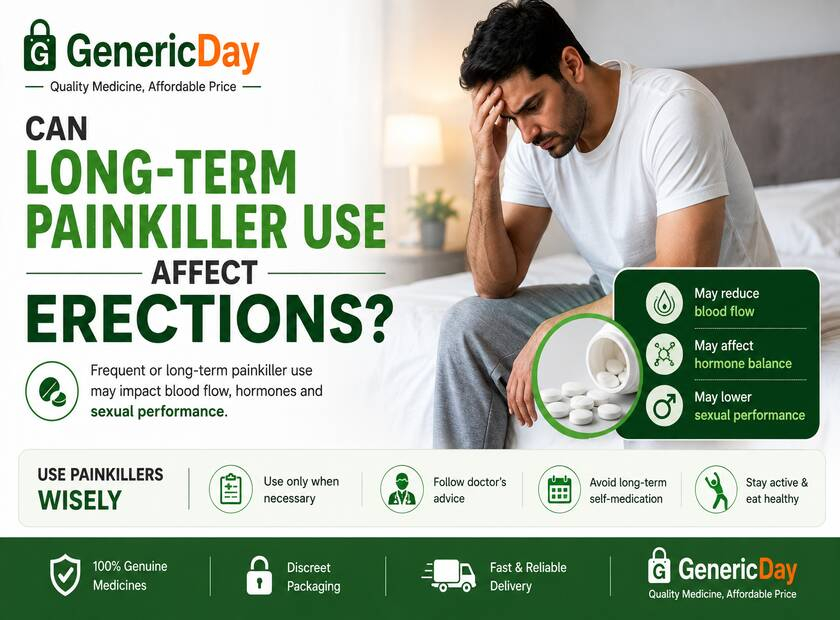
Can long-term painkiller use affect erections? Yes, in some men, prolonged use of certain pain medications particularly opioids may contribute to erectile dysfunction (ED), reduced libido, or other forms of sexual dysfunction. However, painkillers are not the only possible cause. Chronic pain itself, hormonal changes, stress, poor sleep, underlying health conditions, and other medications can also affect sexual function.
If you regularly take pain medication and have recently noticed weaker erections, lower sexual desire, or difficulty maintaining an erection, it is reasonable to discuss the issue with a healthcare professional. Importantly, you should not stop a prescribed painkiller suddenly or change your dose without medical guidance.
The relationship between painkillers and erections is particularly important in men who use opioid medications for chronic pain. Research has linked long-term opioid therapy with suppression of the hypothalamic-pituitary-gonadal axis, reduced testosterone, hypogonadism, lower libido, and sexual dysfunction.
In this article, we will explain how pain medication may affect erectile function, which medications are most relevant, the role of testosterone, whether the problem can be reversed, and what you should do if you suspect your medication is affecting your sexual health.
Can Long-Term Painkiller Use Cause Erectile Dysfunction?
Yes, some long-term painkiller use may contribute to erectile dysfunction, although the level of risk varies depending on the medication, dose, duration of treatment, individual health, and other factors.
Erectile dysfunction means having difficulty getting or keeping an erection that is firm enough for satisfactory sexual activity. It can occur occasionally, but persistent or recurrent ED may indicate an underlying health problem.
According to the National Institute of Diabetes and Digestive and Kidney Diseases (NIDDK), ED can be associated with problems involving blood vessels, nerves, hormones, certain medications, mental health, and lifestyle factors. Some pain relievers, including NSAIDs, codeine, and oxycodone, are among medicines that may contribute to Erectile Dysfunction.
However, it is important not to assume that every case of erectile dysfunction is caused by a painkiller.
For example, a man taking pain medication for severe back pain might experience ED because of several overlapping factors:
- The medication itself may affect sexual function.
- Chronic pain may reduce sexual interest and physical comfort.
- Poor sleep can affect libido and energy.
- Stress or anxiety may interfere with erections.
- An underlying condition such as diabetes or cardiovascular disease may contribute to ED.
- Long-term opioid therapy may suppress testosterone.
This is why a complete medical evaluation is often more useful than simply blaming one medication.
How Do Painkillers Affect Erections?
There is no single mechanism responsible for every case of medication-related erectile dysfunction.
Different medications can affect sexual function through different pathways. In men taking long-term opioids, one of the most important mechanisms involves the hormonal system.
Opioids can interfere with the hypothalamic-pituitary-gonadal (HPG) axis, which plays an important role in testosterone production and reproductive function. Research indicates that chronic opioid exposure can suppress gonadotropin-releasing hormone (GnRH), which can subsequently affect luteinizing hormone and testosterone production.
Lower testosterone can be associated with:
- Reduced sexual desire
- Erectile difficulties
- Fatigue
- Mood changes
- Reduced energy
- Changes in body composition
- Reduced fertility in some men
A systematic review and meta-analysis found that hypogonadism occurred frequently among male chronic opioid users, although the reported prevalence varied considerably between studies and depended on diagnostic criteria.
This does not mean that every man taking an opioid will develop ED or low testosterone. Individual responses vary.
Which Painkillers Can Affect Erectile Function?
Painkillers are a broad category. They include several different medication classes, and their effects on sexual function are not identical.
1. Opioids
Opioids are the most important category to consider when discussing long-term painkiller use and male sexual health.
Examples include:
- Oxycodone
- Codeine
- Morphine
- Hydrocodone
- Fentanyl
- Methadone
- Other prescription opioid analgesics
Long-term opioid therapy has been associated with opioid-induced androgen deficiency (OPIAD). This occurs when opioid exposure suppresses normal reproductive hormone signaling and contributes to low testosterone or hypogonadism.
A 2025 review found that the reported prevalence of opioid-induced androgen deficiency varies widely—approximately 20% to 80% across studies—depending on the opioid, duration of exposure, patient population, age, and definition of low testosterone.
The important point is that opioid-related hormonal changes can potentially affect both libido and erectile function.
2. NSAIDs
NSAIDs, or nonsteroidal anti-inflammatory drugs, are commonly used for pain and inflammation.
Examples include:
- Ibuprofen
- Naproxen
- Diclofenac
- Other NSAIDs
The relationship between NSAIDs and erectile dysfunction is less straightforward than the established concern surrounding chronic opioid therapy.
NIDDK lists NSAIDs among some pain relievers that may be associated with ED, but that does not mean that everyone taking ibuprofen or another NSAID will develop erection problems.
If someone develops ED while taking an NSAID regularly, other possible causes should also be considered.
3. Acetaminophen/Paracetamol
Acetaminophen (paracetamol) is widely used for pain and fever.
It should not automatically be classified alongside opioids when discussing medication-related ED. Evidence about individual medications can differ, and the overall clinical picture matters.
If sexual symptoms appear after beginning any medication, discuss the timing and dosage with your healthcare professional rather than stopping treatment independently.
4. Other Medicines Used for Chronic Pain
Chronic pain is often treated with combinations of medicines rather than one painkiller.
Depending on the condition, treatment may include medications such as antidepressants or anticonvulsants. Some medicines in these broader categories can affect libido or sexual function.
This is one reason a complete medication review can be valuable when evaluating new erectile dysfunction.
Painkillers and Testosterone: Is There a Connection?
For long-term opioid use, there is a clinically important connection between pain medication and testosterone.
Opioids can suppress signaling within the reproductive hormone system. In particular, they can inhibit GnRH release from the hypothalamus, which can reduce downstream hormonal stimulation of testosterone production.
A systematic review and meta-analysis of studies involving opioid users found significantly lower testosterone levels in men using opioids compared with controls, although the researchers also noted limitations in the available evidence.
Another systematic review reported hypogonadism in more than half of male opioid users included in its analysis, while emphasizing the need for periodic evaluation of relevant hormonal systems.
What does low testosterone have to do with erections?
Testosterone is not the only factor required for an erection. Erections also depend on healthy blood vessels, nerves, psychological factors, and normal penile physiology.
However, testosterone is important for sexual desire and reproductive health. Low testosterone may therefore contribute to reduced libido and sexual dysfunction.
A man with low testosterone may notice:
- Reduced interest in sex
- Fewer spontaneous or morning erections
- Erectile difficulties
- Fatigue
- Reduced motivation
- Mood changes
- Reduced muscle mass or strength
These symptoms are not specific to low testosterone, so testing and clinical evaluation may be necessary.
Chronic Pain Itself Can Cause Sexual Problems
One of the biggest mistakes in this topic is assuming that the medication is always responsible.
Chronic pain itself can interfere with sexual function.
When someone lives with persistent pain, sexual activity may become physically uncomfortable or emotionally difficult. Pain can also affect sleep, mood, confidence, physical activity, and relationships.
For example, chronic back pain may make certain sexual positions uncomfortable. Persistent arthritis may limit mobility. Neuropathic pain may create sensitivity or discomfort that reduces sexual activity.
Chronic pain can also be associated with anxiety, depression, fatigue, and poor sleep—all of which can contribute to erectile dysfunction.
Therefore, the relationship may look like this:
Chronic pain → poor sleep/stress/reduced activity → reduced libido or erectile difficulties
while in other cases:
Chronic opioid use → hormonal suppression → lower testosterone → reduced libido/sexual dysfunction
And sometimes both pathways may occur at the same time.
Painkillers vs Chronic Pain: What Is More Likely to Cause ED?
There is no universal answer.
The cause may depend on the individual and the medication involved.
| Possible factor | How it may affect sexual health | What to discuss with a doctor |
|---|---|---|
| Long-term opioids | May suppress reproductive hormones and testosterone | Medication review and possible hormone evaluation |
| Chronic pain | Can affect sleep, mood, activity, and sexual interest | Pain control and overall health |
| NSAIDs | Some pain relievers have been associated with ED | Medication history and alternative options |
| Low testosterone | May reduce libido and contribute to sexual dysfunction | Appropriate hormone testing |
| Stress/anxiety | Can interfere with arousal and erection | Mental health and sexual health support |
This is why medication-induced erectile dysfunction should be considered as one possibility rather than automatically assumed to be the diagnosis.
Is Erectile Dysfunction From Pain Medication Reversible?
In some cases, erectile dysfunction related to medication may improve when the underlying cause is identified and appropriately managed.
However, there is no guarantee that changing a medication will immediately restore erections.
The outcome depends on:
- The medication involved
- Duration of use
- Dose
- Underlying medical conditions
- Testosterone status
- Cardiovascular health
- Psychological factors
- Sleep quality
- Age
- Other medications
If a medication is suspected of contributing to ED, a healthcare professional may review whether the medicine, dose, or treatment strategy should be changed.
NIDDK specifically advises patients not to stop medicines on their own. A healthcare professional may determine whether another medication or dose is appropriate.
This is especially important with opioids because abrupt changes can cause withdrawal and can interfere with pain management.
What Should You Do If Pain Medication Is Affecting Your Erections?
If erectile problems started after beginning or increasing pain medication, don't ignore the pattern—but don't stop the medicine yourself either.
Start by discussing the issue with the healthcare professional who manages your medication.
They may consider:
- Reviewing all prescription and over-the-counter medicines
- Looking at when the ED symptoms started
- Assessing the severity of chronic pain
- Reviewing opioid dose and duration, if applicable
- Considering testosterone testing when clinically appropriate
- Checking for diabetes or cardiovascular risk factors
- Reviewing mental health and sleep
- Considering appropriate ED treatment
- Evaluating alternative pain-management approaches
For men taking long-term opioids, symptoms such as reduced libido, fatigue, erectile dysfunction, or other signs of androgen deficiency may justify discussion of hormonal evaluation.
Can Opioids Cause Erectile Dysfunction?
Yes, long-term opioid use can contribute to erectile dysfunction in some men.
One of the main concerns is opioid-induced androgen deficiency. Chronic opioids can suppress the HPG axis and reduce testosterone production, potentially contributing to reduced libido and sexual dysfunction.
However, opioid-related ED may involve more than testosterone alone. Chronic illness, pain, depression, sleep disturbance, other medications, and cardiovascular health can all influence sexual function.
Therefore, men using opioids long-term should discuss persistent sexual symptoms with a healthcare professional rather than assuming the problem is simply an unavoidable side effect.
Can NSAIDs Cause Erectile Dysfunction?
The answer is more complicated.
Some sources, including NIDDK, list NSAIDs among pain relievers that may contribute to ED.
However, an individual taking ibuprofen or another NSAID should not automatically conclude that the medication is responsible for erectile dysfunction.
The reason is that ED has many possible causes, including:
- Diabetes
- High blood pressure
- Cardiovascular disease
- Obesity
- Low testosterone
- Depression
- Anxiety
- Smoking
- Certain medications
- Nerve problems
- Chronic illness
If symptoms persist, a healthcare professional can help determine whether the medication is likely to be contributing.
Signs That Your Medication May Be Affecting Sexual Function
A possible medication connection becomes more worth discussing when symptoms appear after starting a medicine or increasing its dose.
Potential signs include:
- A noticeable reduction in sexual desire
- Fewer spontaneous erections
- Difficulty achieving an erection
- Difficulty maintaining an erection
- Changes in erection firmness
- Reduced sexual satisfaction
- Fatigue accompanying sexual changes
- Other symptoms that may suggest low testosterone
The timing alone does not prove causation, but it can provide an important clue.
Keeping a simple record of medication changes and symptoms can make the discussion with your doctor more productive.
How Doctors Evaluate Medication-Related Erectile Dysfunction
There is no single test that proves a painkiller caused ED.
Healthcare professionals generally consider the whole clinical picture.
The evaluation may include:
Medical and medication history
Your doctor may ask:
- When did the erectile problem begin?
- When did you start the medication?
- Has the dose changed?
- Are you taking other medicines?
- Has your libido changed?
- Do you still have morning or spontaneous erections?
- How severe is your chronic pain?
Physical health assessment
Conditions such as diabetes, obesity, cardiovascular disease, hypertension, and neurological disorders can contribute to ED.
Hormonal evaluation
If symptoms suggest testosterone deficiency—particularly in men receiving long-term opioids—a clinician may consider appropriate hormone testing.
Testosterone therapy should not be started simply because someone has ED. It is a medical treatment that requires assessment of the individual's symptoms, laboratory findings, risks, and goals.
What Treatments Are Available for Erectile Dysfunction?
Treatment depends on the cause.
If medication is contributing to ED, the first step may be a medication review.
If low testosterone is confirmed, the healthcare professional may discuss appropriate management.
If the primary problem is vascular ED, other evidence-based treatments may be considered.
NIDDK notes that healthcare professionals may review medicines that could be contributing to ED and may adjust the dose or switch medication when appropriate. PDE5 inhibitors are another class of medicines that can improve penile blood flow and help some men achieve and maintain erections.
Treatment may therefore involve one or several approaches:
- Addressing an underlying medical condition
- Reviewing medications
- Improving cardiovascular health
- Treating anxiety or depression when relevant
- Improving sleep and physical activity
- Managing chronic pain effectively
- Treating confirmed hormone deficiency
- Using appropriate ED medication when prescribed
The goal is not simply to treat the erection. It is to identify and address the factors contributing to the problem.
Can Tadalafil-Based Treatments Such as Vidalista 60 Help With ED?
Vidalista 60 is a tadalafil-based medication used for the treatment of erectile dysfunction. Tadalafil belongs to a class of medicines called PDE5 inhibitors, which can help improve blood flow to the penis when sexual stimulation occurs. For men whose erectile difficulties are related to medication use, a healthcare professional may consider an ED treatment such as tadalafil after evaluating the underlying cause, current medicines, and overall health.
Can Stopping Pain Medication Improve Erectile Dysfunction?
It can in some situations, but stopping medication is not automatically the correct solution.
If a medication is contributing to ED, changing or reducing it under medical supervision may improve symptoms. But the result depends on the underlying cause and whether other factors are also present.
With opioids, abrupt discontinuation can cause withdrawal and may worsen pain. Any reduction or change should therefore be planned with the prescribing clinician.
If the pain medication is essential, the healthcare team may explore other strategies for managing pain and sexual health rather than simply discontinuing treatment.
5 Things Men Should Know About Painkillers and Erections
- Not every painkiller causes erectile dysfunction. Medication effects vary considerably.
- Long-term opioid use deserves particular attention because of its association with testosterone suppression and hypogonadism.
- Chronic pain itself can affect sexual function, so medication may not be the only explanation.
- ED can be an early sign of another health problem, including cardiovascular or metabolic disease.
- Never stop prescribed medication suddenly without medical advice, particularly opioids. NIDDK recommends discussing suspected medication-related ED with a healthcare professional before making medication changes.
When Should You See a Doctor?
Occasional difficulty getting an erection is common. But persistent or recurring erectile dysfunction deserves attention, particularly when it affects relationships, confidence, or quality of life.
Consider speaking with a healthcare professional if:
- ED continues for several weeks.
- Symptoms started after a medication change.
- You take opioids regularly.
- You also have low libido or unusual fatigue.
- You have symptoms that could indicate low testosterone.
- You have diabetes, high blood pressure, obesity, or cardiovascular risk factors.
- The problem is becoming progressively worse.
- You are concerned about changing or reducing your pain medication.
ED may sometimes be a symptom of another health problem, so treating it as only a sexual issue can miss an underlying condition.
Frequently Asked Questions About Painkillers and Erectile Dysfunction
1. Can long-term painkiller use cause erectile dysfunction?
Yes, certain painkillers can contribute to erectile dysfunction, particularly with long-term use. Opioids are especially important because they can suppress reproductive hormone signaling and lower testosterone in some men.
2. Can opioids cause erectile dysfunction?
Yes. Long-term opioid use may contribute to ED through opioid-induced androgen deficiency, reduced testosterone, and other effects associated with chronic pain and illness.
3. Do painkillers lower testosterone?
Some can. Chronic opioid therapy has been associated with suppression of testosterone and other reproductive hormones. The effect varies between individuals and medications.
4. Can chronic pain itself cause erectile dysfunction?
Yes. Chronic pain can affect sleep, mood, physical activity, confidence, and sexual interest, all of which can contribute to erectile difficulties.
5. Can ibuprofen affect erections?
It may be associated with ED in some circumstances, but it does not mean everyone taking ibuprofen will develop erectile dysfunction. Other causes should also be considered.
6. Is medication-induced erectile dysfunction reversible?
It can be reversible in some cases, particularly when the contributing medication or underlying condition can be safely addressed. However, recovery varies between individuals.
7. Should I stop taking painkillers if I develop ED?
No—not without medical advice. Talk with your healthcare professional first. This is particularly important if you are taking prescription opioids.
8. How do I know whether my medication is causing ED?
Doctors may look at the timing of symptoms, medication history, other health conditions, hormone symptoms, and other possible causes. There is no single test that proves a medication caused ED.
9. Can low testosterone cause erection problems?
Low testosterone can contribute to reduced libido and sexual dysfunction, including erectile difficulties. However, testosterone is only one part of normal erectile function.
10. What should I do if pain medication is affecting my erections?
Speak with your doctor or prescribing healthcare professional. They can review your medications, assess other causes of ED, consider appropriate testing, and discuss safe treatment options.
Conclusion: Can Long-Term Painkiller Use Affect Erections?
Yes, long-term use of certain painkillers can affect sexual function, and opioids are particularly important when considering medication-related erectile dysfunction. Chronic opioid exposure can interfere with the hypothalamic pituitary-gonadal axis and may contribute to opioid-induced androgen deficiency, lower testosterone, reduced libido, and erectile problems.
But pain medication is only one possible piece of the puzzle.
Chronic pain itself, poor sleep, stress, depression, cardiovascular disease, diabetes, obesity, hormone problems, and other medications can all contribute to erectile dysfunction.
If you are experiencing persistent ED while taking pain medication, the best approach is not to stop the medication on your own. Instead, discuss your symptoms with a qualified healthcare professional. A medication review, assessment of underlying conditions, and—when appropriate hormonal evaluation can help identify the real cause.
The good news is that erectile dysfunction is often treatable once the contributing factors are identified. The right treatment depends on whether the problem is primarily related to medication, hormones, blood flow, nerves, chronic pain, psychological factors, or a combination of these.