The Future of At-Home Erectile Dysfunction Testing

Imagine being able to understand your erectile health from the privacy of your own home without an awkward waiting-room conversation, without repeated clinic visits, and without guessing whether a change in erection quality is simply temporary or a sign of an underlying health issue.
That future is getting closer.
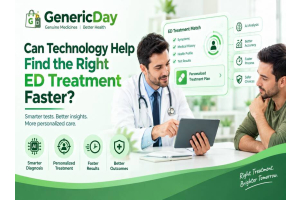
At-home erectile dysfunction testing is evolving alongside telehealth, home laboratory testing, wearable devices, artificial intelligence (AI), digital biomarkers, and personalized healthcare. While no single home test can replace a comprehensive medical evaluation in every situation, emerging technologies could make erectile dysfunction (ED) screening and monitoring more convenient, private, and data-driven.
This matters because erectile dysfunction is not simply a sexual-performance issue. Persistent Erectile Dysfunction can be associated with conditions such as diabetes, high blood pressure, cardiovascular disease, hormonal problems, medication effects, and psychological factors. For some men, changes in erectile function may therefore provide an important reason to look more closely at overall health.
So, can you test for erectile dysfunction at home today, and what might ED testing look like tomorrow?
Let's explore the current landscape, the technologies shaping the future, and what men should know before relying on an at-home Erectile Dysfunction test.
What Is At-Home Erectile Dysfunction Testing?
At-home erectile dysfunction testing refers to tools, assessments, laboratory tests, questionnaires, or digital health services that allow someone to evaluate aspects of erectile or sexual health without beginning with an in-person clinic visit.
The phrase can describe several different approaches, including:
- Online erectile dysfunction assessments
- Sexual-health questionnaires
- At-home blood or hormone testing
- Telehealth consultations
- Home health measurements
- Nocturnal erection monitoring
- Wearable health technologies
- Smartphone-based assessments
- Emerging AI-assisted health analysis
It is important to understand that these approaches do not all do the same thing.
An online questionnaire may help identify symptoms, while a laboratory test can measure a biological marker such as testosterone. A telehealth consultation may allow a clinician to review symptoms and medical history. A future wearable device could potentially collect continuous physiological data.
Therefore, an ED self-test should generally be viewed as part of an assessment process rather than an automatic substitute for professional diagnosis.
Can You Test for Erectile Dysfunction at Home?
Yes, certain aspects of erectile health can be assessed at home, but there is an important distinction between screening, monitoring, and diagnosis.
A man can privately assess symptoms, complete a validated erectile-function questionnaire, monitor relevant health measurements, or use certain home laboratory services where available. Telehealth may also allow a healthcare professional to evaluate symptoms remotely.
However, erectile dysfunction can have multiple causes. A proper evaluation may involve medical history, sexual history, medication review, physical examination when appropriate, and laboratory testing based on individual circumstances.
This means the most useful question is not simply:
“What is the best home Erectile Dysfunction test?”
Instead, it is:
“Which aspects of my erectile health can be safely assessed at home, and when do I need professional evaluation?”
That distinction will become increasingly important as technology makes home-based health testing more sophisticated.
How Is Erectile Dysfunction Currently Diagnosed?
Erectile dysfunction is generally evaluated through a combination of information rather than one universal test.
A healthcare professional may consider:
- Difficulty getting an erection
- Difficulty maintaining an erection
- Changes in erection firmness
- Sexual desire and libido
- Morning or nocturnal erections
- Medication use
- Medical conditions
- Lifestyle factors
- Psychological and relationship factors
- Cardiovascular and metabolic risk factors
- Relevant laboratory results
A clinician may also use a standardized erectile-function questionnaire to understand the severity and impact of symptoms.
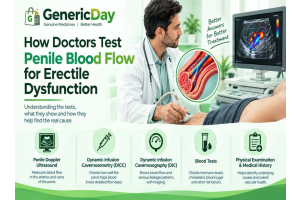
What tests are used for erectile dysfunction?
Depending on the individual situation, testing can include blood tests or other investigations to identify potentially relevant underlying factors.
For example, a clinician may consider measurements related to:
- Testosterone and other hormones
- Blood glucose
- Cardiovascular risk
- Lipids
- Other clinically relevant laboratory markers
The exact tests should be determined according to symptoms, medical history, and clinical judgment rather than through a one-size-fits-all testing package.
At-Home Erectile Dysfunction Testing: What Can You Actually Measure?
The growing availability of home health technology means more health information can potentially be collected outside a traditional clinic.
| At-home approach | What it may assess | Main limitation |
|---|---|---|
| Sexual-health questionnaire | ED symptoms and severity | Does not identify every underlying cause |
| Home laboratory testing | Selected biomarkers | Results require appropriate interpretation |
| Telehealth | Symptoms and medical history | Physical examination may be limited |
| Wearable monitoring | Physiological patterns | Emerging applications may require validation |
| Digital health apps | Self-reported trends and measurements | Quality varies between platforms |
The key idea is that home testing produces information—not necessarily a complete diagnosis.
The Rise of Telehealth for Erectile Dysfunction
One of the biggest changes in sexual healthcare is the growth of telehealth.
For men who feel uncomfortable discussing erectile dysfunction face-to-face, a virtual consultation can lower the psychological barrier to seeking help. A healthcare professional can ask about symptoms, medications, health conditions, lifestyle factors, and sexual history.
Depending on the circumstances and local regulations, telehealth may also support treatment discussions and follow-up care.
Why does telehealth matter for Erectile Dysfunction?
Privacy is a major factor.
Erectile dysfunction can be difficult to discuss because men may associate erectile problems with aging, masculinity, sexual performance, or self-confidence. A convenient digital consultation can make it easier to start the conversation.
Telehealth can also connect patients with healthcare professionals without requiring a physical appointment for every interaction.
The future is therefore unlikely to be simply “home test versus doctor's office.”
Instead, the model may become:
Home data → digital assessment → clinician review → targeted testing → personalized care.
How At-Home Blood Testing Could Change ED Evaluation
Blood testing is another important part of the home-testing ecosystem.
Certain home laboratory services allow individuals to collect biological samples outside a traditional clinic. Depending on the service and jurisdiction, testing may include biomarkers relevant to general health or hormone status.
Can a blood test detect erectile dysfunction?
A blood test does not necessarily “diagnose Impotence” by itself.
Instead, laboratory testing can help identify or investigate factors that may contribute to erectile difficulties.
For example, hormonal abnormalities or metabolic health problems may be relevant to some individuals.
Testosterone Testing and Erectile Dysfunction
Testosterone is frequently discussed in conversations about erectile dysfunction, but sexual function is more complicated than one hormone.
Low testosterone can be associated with symptoms such as reduced sexual desire and may contribute to sexual difficulties in some men. However, erectile dysfunction can also involve vascular, neurological, psychological, medication-related, and other factors.
This is why searching for a simple “testosterone test for Erectile Dysfunction” may provide only part of the picture.
Future home-testing systems could potentially combine hormone information with other health data to produce a more comprehensive picture of sexual health.
However, abnormal results should be interpreted appropriately rather than used for self-diagnosis or self-treatment.
Could Wearable Devices Detect Erectile Dysfunction?
Wearable technology could become one of the most interesting developments in future Erectile disorder testing.
Smartwatches, fitness trackers, and other connected health devices can already collect various physiological measurements. Future specialized devices could potentially monitor physiological patterns relevant to erectile function.
One particularly interesting area is nocturnal erection monitoring.
Erections during sleep can provide information that may help clinicians understand certain aspects of erectile function. Historically, specialized equipment has been used in clinical settings to measure nocturnal penile tumescence and rigidity.
The future could involve smaller, less intrusive sensors capable of collecting data in a person's normal sleeping environment.
But there is an important caveat:
A wearable measurement should not automatically be interpreted as proof that someone does or does not have erectile dysfunction.
Device accuracy, validation, data quality, and clinical interpretation all matter.
AI and the Future of Erectile Dysfunction Diagnosis
Artificial intelligence could fundamentally change how large amounts of health information are interpreted.
An AI-powered Erectile Dysfunction assessment might eventually combine:
- Symptom history
- Questionnaire responses
- Laboratory results
- Medication information
- Sleep data
- Activity data
- Cardiometabolic measurements
- Wearable sensor information
- Long-term health trends
Rather than examining one measurement in isolation, machine-learning systems could potentially identify patterns across multiple data sources.
What could AI do for ED testing?
Potential applications include:
- Risk prediction: Identifying patterns associated with increased risk of erectile dysfunction.
- Personalized assessment: Comparing an individual's information against relevant clinical patterns.
- Trend monitoring: Detecting changes over time rather than relying on a single appointment.
- Clinical decision support: Helping healthcare professionals organize and interpret complex patient information.
- Patient engagement: Explaining health information in more accessible language.
However, AI erectile dysfunction diagnosis should not be confused with an independently validated medical diagnosis.
AI systems can produce errors, reflect limitations in their training data, and misunderstand incomplete or inaccurate information. Clinical oversight remains important.
Digital Biomarkers: The Next Frontier in Erectile Dysfunction Testing
One of the most promising concepts in digital health is the digital biomarker.
A traditional biomarker might be a measurable biological characteristic found through laboratory testing.
A digital biomarker, broadly speaking, can involve health-related information captured through digital devices or software.
For erectile health, researchers and technology developers may explore whether combinations of physiological, behavioral, sleep, cardiovascular, or other digital signals can provide useful information.
Imagine a future system that does not ask someone to remember how their erectile function has changed over six months.
Instead, it might identify changes through continuously collected data and prompt the individual to seek professional evaluation.
That would represent a shift from:
“I think something has changed.”
to:
“My long-term health data suggests that something may have changed.”
The technology still needs rigorous clinical validation before such concepts can become reliable diagnostic tools.
Smartphone-Based Erectile Dysfunction Testing
Smartphones could also become part of future sexual-health monitoring.
A future Erectile Dysfunction health application might combine:
- Validated questionnaires
- Symptom tracking
- Medication reminders
- Health measurements
- Laboratory results
- Telehealth access
- Wearable-device information
- Personalized educational content
The biggest advantage would be continuity.
Instead of collecting information only when a patient visits a doctor, digital systems could help create a longer-term record of changes.
However, privacy and security will be essential.
Sexual-health information is highly sensitive. Any future smartphone erectile dysfunction test would need strong data protection, transparent consent practices, and responsible handling of personal health information.
The Role of Personalized Medicine in ED Testing
The future of erectile dysfunction testing is likely to become more personalized.
Today, two men can experience similar symptoms but have completely different contributing factors.
One person's Erectile Dysfunction may be associated primarily with cardiovascular risk. Another may have hormonal issues. Another may experience significant psychological or relationship-related factors. Medication or lifestyle may play a role for someone else.
This means future Erectile Dysfunction testing should ideally move beyond a single score.
Instead, it could create a personalized health profile incorporating multiple dimensions:
- Sexual symptoms
- Physical health
- Hormonal status
- Cardiovascular risk
- Metabolic health
- Psychological factors
- Lifestyle
- Medication
- Long-term digital health trends
This approach could make personalized erectile dysfunction testing more useful than a single isolated home measurement.
Benefits of At-Home Erectile Dysfunction Testing
The growth of home-based healthcare could offer several advantages.
1. Privacy
Men may feel more comfortable beginning an assessment in a familiar environment.
2. Convenience
Home-based assessments can reduce unnecessary travel and waiting-room time.
3. Earlier engagement
A convenient screening process may encourage people who have delayed seeking help to start a conversation.
4. Continuous monitoring
Digital technologies can potentially collect information over time rather than relying on a single snapshot.
5. Better patient participation
People may become more engaged when they can see and understand their own health trends.
6. Integration with telehealth
Home data can potentially be reviewed alongside remote clinical consultations.
Limitations and Risks of At-Home ED Testing
Technology is not automatically better simply because it is newer.
There are several limitations to consider.
Not every test is clinically validated
A product may collect data without proving that the measurement can accurately diagnose a medical condition.
Home results can be misunderstood
A person may see an abnormal result and assume it explains their ED when it may not.
ED has multiple causes
No single biomarker can capture every physiological and psychological factor involved in erectile function.
Privacy matters
Sexual-health data is extremely sensitive, particularly when collected through apps and connected devices.
Professional evaluation may still be necessary
Persistent or concerning erectile problems deserve appropriate medical attention, particularly because ED can sometimes be associated with broader health conditions.
What Will the Future of At-Home ED Testing Look Like?
The future will probably not be one magical at-home erectile dysfunction test.
Instead, it is more likely to be an ecosystem.
A person could complete a validated questionnaire at home, collect selected laboratory samples, connect wearable health information, and consult a healthcare professional through telehealth.
AI could help organize the information.
Digital biomarkers could provide additional context.
Wearable technology could monitor patterns over time.
The clinician could then determine which information is clinically meaningful and what further evaluation is appropriate.
| Current approach | Emerging direction | Potential future model |
|---|---|---|
| Clinic-based evaluation | Telehealth | Hybrid digital + clinical care |
| Single-point measurements | Continuous monitoring | Longitudinal health profiles |
| Basic questionnaires | Digital assessments | Personalized risk assessment |
| Conventional laboratory tests | Home collection | Integrated biomarker monitoring |
| Manual interpretation | AI-assisted analysis | Clinician-supervised decision support |
This represents a broader movement toward preventive, personalized, and decentralized healthcare.
What Should Men Do If They Suspect ED?
Technology should make it easier—not harder—to seek appropriate care.
If erection problems happen repeatedly or cause concern, consider discussing them with a qualified healthcare professional.
This is especially important when erectile changes occur alongside other symptoms or health concerns.
Rather than searching endlessly for the “best ED test,” focus on understanding the underlying issue.
A useful starting point is to document:
- When the problem started
- Whether it happens consistently
- Whether erections occur during sleep or on waking
- Changes in sexual desire
- Current medications
- Relevant health conditions
- Lifestyle changes
- Stress, anxiety, or relationship factors
This information can make a professional consultation more productive.
Can Cenforce 100 Be Used for Erectile Dysfunction?
At-home erectile dysfunction testing can help men understand their symptoms, but testing and treatment are two different things.
Cenforce 100, which contains sildenafil, is a prescription ED medication used to help men achieve and maintain an erection when sexually stimulated.
It should not be considered an erectile dysfunction test or a way to determine the underlying cause of ED. A healthcare professional can assess whether sildenafil is appropriate based on a person's health history, medications, and cardiovascular risk factors.
Because sildenafil can interact with certain medicines, particularly nitrate medications used for chest pain, it is important to seek appropriate medical advice before using it. Men with certain heart or blood-pressure conditions may also require individual assessment.
The future of ED care may combine convenient at-home assessments with telehealth consultations, laboratory testing, and personalized treatment plans. In this model, medications such as sildenafil may be considered as part of clinician-guided treatment rather than as a substitute for diagnosis.
The Future Is Home-Based—but Not Doctor-Free
The biggest misconception about the future of at-home erectile dysfunction testing would be assuming that technology will eliminate healthcare professionals.
The more realistic future is technology-assisted healthcare.
Home testing can provide convenience.
Wearables can provide data.
AI can help identify patterns.
Telehealth can improve access.
But clinicians provide context, judgment, diagnosis, and individualized medical care.
The winning model will therefore combine home convenience with clinical expertise.
Frequently Asked Questions About At-Home Erectile Dysfunction Testing
1. Can you test for erectile dysfunction at home?
Yes, some aspects of erectile health can be assessed at home, but a complete diagnosis may require professional medical evaluation.
2. What is an at-home erectile dysfunction test?
An at-home ED test can refer to questionnaires, home laboratory testing, health monitoring, or digital assessments designed to evaluate aspects of erectile or general health.
3. Are at-home ED tests accurate?
Accuracy depends on the specific test, its validation, how it is performed, and how the results are interpreted.
4. Can a blood test detect erectile dysfunction?
Blood tests generally do not diagnose ED by themselves but may identify medical or hormonal factors that could contribute to erectile problems.
5. Can you test testosterone at home?
Some home laboratory services offer testosterone testing, but results should be interpreted in the context of symptoms and appropriate clinical guidance.
6. Can AI diagnose erectile dysfunction?
AI may support future risk assessment and clinical decision-making, but AI-based tools should not automatically be considered replacements for professional diagnosis.
7. Can wearable devices detect erectile dysfunction?
Wearables may eventually help monitor physiological patterns related to erectile function, but their diagnostic accuracy and clinical usefulness require appropriate validation.
8. Can erectile dysfunction be diagnosed online?
Telehealth can allow clinicians to assess symptoms and medical history remotely, although some situations may still require an in-person examination or testing.
9. What is the future of ED testing?
The future may combine home testing, telehealth, wearables, digital biomarkers, AI-assisted analysis, and personalized medical evaluation.
10. When should I see a doctor about erectile dysfunction?
If erectile difficulties are persistent, recurring, or concerning, professional evaluation can help identify potential causes and appropriate treatment options.
Conclusion: A Smarter Future for Erectile Dysfunction Testing
The future of at-home erectile dysfunction testing is not simply about creating a faster way to take a test.
It is about making men's sexual healthcare more private, accessible, personalized, continuous, and connected.
Telehealth is already changing how people interact with healthcare. Home laboratory testing is expanding access to selected health measurements. Wearables are creating new streams of physiological data. AI and digital biomarkers could eventually help identify meaningful patterns that traditional appointments may miss.
But innovation must be matched by evidence.
The most valuable future technology will not be the one that produces the most data. It will be the one that produces reliable, clinically meaningful information while protecting privacy and keeping qualified healthcare professionals involved.
For men experiencing erectile difficulties today, the message is simple: don't rely solely on a home test or online score. Use technology as a starting point for understanding your health, and seek appropriate professional evaluation when symptoms persist.
Tomorrow's ED testing may happen increasingly at home but the future of effective care will likely be a partnership between the patient, technology, and the clinician.