Why Blood Vessel Health Matters for Better Erections
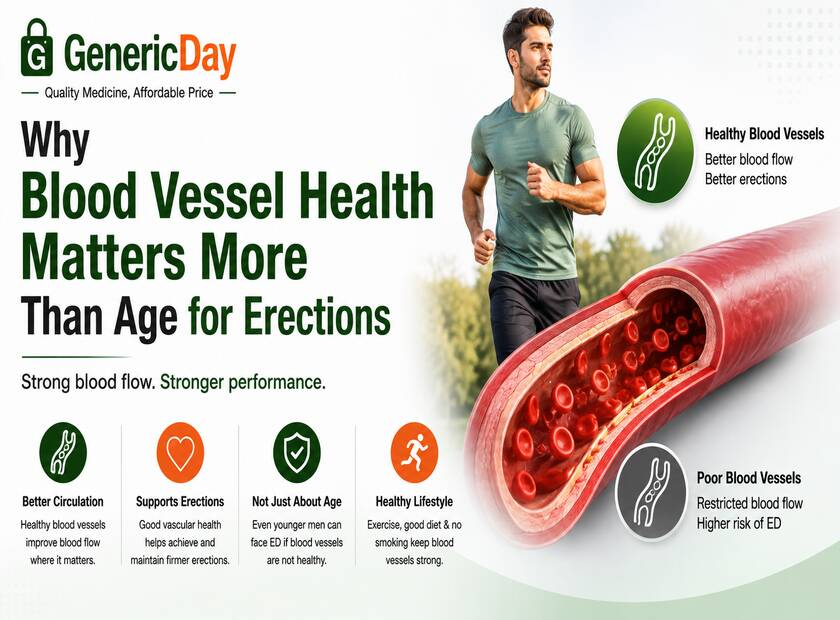
Why Blood Vessel Health Matters More Than Age for Erections
Getting older does not automatically mean you have to accept weaker erections.
That is one of the biggest misconceptions about male sexual health.
While age can increase the likelihood of erectile changes, blood vessel health, circulation, cardiovascular health, and endothelial function play a crucial role in determining how well an erection develops and how long it lasts. In fact, an erection is fundamentally a vascular event: the penis needs healthy arteries, responsive blood vessels, adequate blood flow, and proper nitric oxide signaling to become and remain firm.
This is why two men of the same age can have completely different erectile function.
One may continue to have satisfying erections well into his 60s or 70s, while another may experience erectile dysfunction much earlier. The difference is not necessarily their age. It can be their vascular health, blood pressure, cholesterol, diabetes status, smoking history, physical activity, weight, and overall cardiovascular health.
Understanding this connection changes the conversation around erectile dysfunction.
Instead of thinking, "I'm getting older, so this is normal," it may be more useful to ask:
"How healthy are my blood vessels?"
That question matters because the same blood vessels that support erections also play an important role throughout the cardiovascular system.
In this article, we will explore how blood flow affects erections, why vascular health influences erectile function, the connection between heart health and erectile dysfunction, why erections can become weaker with age, and what you can do to support healthier blood vessels.
What Is the Connection Between Blood Vessel Health and Erections?
An erection depends heavily on adequate blood flow.
When sexual stimulation occurs, the nervous system triggers chemical signals that encourage the blood vessels supplying the penis to relax and widen. One of the most important substances involved in this process is nitric oxide.
Nitric oxide helps relax the smooth muscle surrounding penile blood vessels. As these vessels dilate, more blood enters the erectile tissues. The increased blood flow expands the erectile tissue and helps compress veins that would otherwise allow blood to leave.
The result is an erection.
This means that healthy erections require more than sexual desire. They require a functioning vascular system.
When arteries become narrowed, stiff, or less responsive, the penis may not receive enough blood to achieve optimal rigidity. Problems with the endothelium—the thin inner lining of blood vessels—can also interfere with normal vasodilation.
This is why vascular erectile dysfunction is an important concept in understanding erection problems.
The basic process looks like this:
Sexual stimulation → nitric oxide release → blood vessel relaxation → increased penile blood flow → erection
If any part of this process is impaired, erection quality can potentially be affected.
Why Age Is a Risk Factor—But Not the Whole Story
Age and erectile function are connected, but saying that age alone causes erectile dysfunction is an oversimplification.
As men get older, several physiological changes can occur. Hormonal levels may change, medications may become more common, physical activity may decline, and health conditions such as hypertension, diabetes, high cholesterol, and cardiovascular disease become more prevalent.
These factors can affect both arterial health and erectile function.
In other words, some changes that are commonly attributed to "aging" may actually be related to the accumulation of vascular and metabolic risk factors over time.
A healthy 60-year-old who exercises regularly, does not smoke, maintains healthy blood pressure, and manages cholesterol may have very different vascular health from a sedentary 60-year-old with uncontrolled hypertension and diabetes.
Therefore, age is better understood as a risk factor rather than a complete explanation for erectile dysfunction.
Normal aging versus potentially treatable problems
Some changes in sexual function can occur naturally with age. For example, an older man may need more stimulation or may notice that erections are not as spontaneous as they were in his 20s.
However, persistent difficulty getting or maintaining an erection should not automatically be dismissed as an unavoidable consequence of getting older.
Possible contributing factors include:
- Poor circulation and impaired penile blood flow
- High blood pressure
- High cholesterol
- Diabetes and insulin resistance
- Smoking
- Obesity and physical inactivity
- Cardiovascular disease
- Certain medications
- Psychological stress and anxiety
- Hormonal or neurological conditions
This distinction is important because several of these factors can be addressed.
How Blood Flow Affects Erections
To understand erectile function, think of the penis as a system that depends on controlled changes in blood flow.
During sexual arousal, arteries supplying the erectile tissue need to expand. The erectile chambers then fill with blood. As pressure rises, veins are compressed, helping maintain rigidity.
Healthy penile blood flow therefore depends on blood vessels being capable of responding appropriately.
If arteries are narrowed or stiffened, blood delivery may be reduced.
If endothelial function is impaired, the vessels may not dilate as effectively.
If cardiovascular risk factors are present, the entire process can become less efficient.
This is one reason why erection blood flow is closely linked with overall vascular health.
Why the endothelium matters
The endothelium is more than a passive lining.
It helps regulate:
- Blood vessel relaxation and constriction
- Nitric oxide production and signaling
- Blood flow
- Inflammation
- Interactions between blood and vessel walls
Endothelial dysfunction and ED can therefore occur together because both involve impaired vascular function.
When the endothelium does not function properly, the blood vessels may have a harder time relaxing when increased blood flow is needed.
The Cardiovascular Connection: Why ED Can Matter Beyond Sex
One of the most important reasons to take persistent erectile dysfunction seriously is its potential relationship with cardiovascular health.
The penis contains relatively small blood vessels. Problems affecting the vascular system can sometimes become noticeable in erectile function before more obvious cardiovascular symptoms appear.
This does not mean that every case of erectile dysfunction is caused by heart disease.
However, the conditions that damage blood vessels can also increase the likelihood of ED.
These include:
- High blood pressure
- High LDL cholesterol
- Diabetes
- Smoking
- Obesity
- Physical inactivity
- Atherosclerosis
- Cardiovascular disease
This is why researchers and clinicians have paid attention to Erectile Dysfunction as a cardiovascular warning sign in appropriate patients.
If someone develops persistent or unexplained erectile dysfunction, particularly when cardiovascular risk factors are also present, discussing the issue with a healthcare professional can be worthwhile.
The goal is not simply to improve sexual performance.
It is to understand whether there are underlying factors affecting overall health.
5 Major Factors That Can Damage Blood Vessel Health and Erections
| Risk factor | What it can do to blood vessels | Potential effect on erections |
|---|---|---|
| High blood pressure | Can contribute to vascular damage and stiffness | May reduce efficient penile blood flow |
| High cholesterol | Can contribute to plaque buildup in arteries | May restrict blood flow |
| Diabetes | Can damage blood vessels and nerves | Can interfere with erection development and maintenance |
| Smoking | Damages vascular function and promotes atherosclerosis | Can impair circulation and erection quality |
| Physical inactivity | Can worsen cardiovascular and metabolic health | May contribute to poorer vascular function |
1. High Blood Pressure and Erectile Function
High blood pressure can place continuous stress on artery walls.
Over time, this may contribute to changes in vascular function and arterial stiffness. Because erections require arteries to expand and deliver sufficient blood, impaired vascular responsiveness can affect erectile function.
Men with hypertension may therefore have an increased risk of erectile dysfunction.
The important point is that blood pressure is a modifiable cardiovascular risk factor.
Managing it under the guidance of a healthcare professional can benefit overall cardiovascular health and may also support sexual health.
2. Cholesterol and Arterial Health
Cholesterol is essential for many functions in the body, but abnormal blood lipid levels—particularly elevated LDL cholesterol—can contribute to atherosclerosis.
Atherosclerosis involves the buildup of plaque within arteries.
When arteries become narrowed or less flexible, blood flow can be affected.
Because adequate penile blood flow is necessary for an erection, poor arterial health may contribute to erectile difficulties.
This is another reason sexual health and cardiovascular health should not be viewed as completely separate subjects.
3. Diabetes and Erectile Dysfunction
Diabetes is another important risk factor for erectile dysfunction.
Persistently elevated blood glucose can contribute to damage involving both blood vessels and nerves. Since erections depend on healthy vascular and neurological signaling, diabetes can interfere with several parts of the erectile process.
Diabetes can also increase the risk of cardiovascular disease and atherosclerosis.
For men with diabetes, managing blood glucose and other cardiovascular risk factors is therefore important for both general health and sexual function.
4. Smoking and Blood Vessel Health
Smoking is particularly harmful to vascular health.
Tobacco exposure can damage the endothelium, promote inflammation, and contribute to atherosclerosis. It can also impair the normal vascular mechanisms required for healthy circulation.
Because erections depend on blood vessels functioning properly, smoking can negatively affect erectile function.
Quitting smoking is therefore one of the most meaningful lifestyle changes a smoker can make for long-term vascular health.
5. Physical Inactivity, Weight, and Metabolic Health
Regular physical activity supports cardiovascular fitness and helps improve several factors associated with vascular health.
A sedentary lifestyle can contribute to:
- Weight gain
- Poor cardiovascular fitness
- High blood pressure
- Insulin resistance
- Abnormal cholesterol
- Reduced metabolic health
These conditions can collectively affect blood vessel function.
This does not mean that exercise is an instant treatment for erectile dysfunction. Rather, regular activity can be part of a broader strategy for supporting heart health, circulation, metabolic health, and vascular function.
Why Some Men Have Stronger Erections at an Older Age Than Younger Men
This question highlights why age alone cannot explain erectile function.
Imagine two men who are both 60.
One exercises regularly, maintains a healthy weight, does not smoke, manages his blood pressure and cholesterol, and has good cardiovascular fitness.
The other has uncontrolled hypertension, diabetes, high cholesterol, a sedentary lifestyle, and a long history of smoking.
Their chronological age is identical.
Their vascular age may be very different.
This illustrates why blood vessel health matters more than age alone when discussing many aspects of erectile function.
Aging can increase exposure to vascular risk factors, but the health of those blood vessels remains highly relevant.
The bigger picture
Erectile function reflects a combination of:
Age + vascular health + nerve function + hormones + medications + psychological factors + overall health
Therefore, improving vascular health cannot guarantee a perfect erection, but it can address one of the major physiological foundations of erectile function.
Is Erectile Dysfunction Always Caused by Poor Circulation?
No.
Poor circulation is an important contributor, but erectile dysfunction can have multiple causes.
Some men have predominantly vascular causes. Others may have neurological, hormonal, psychological, medication-related, or mixed causes.
For example, anxiety surrounding sexual performance can interfere with erections even when blood vessels are healthy.
Certain medications may also contribute to erectile difficulties.
Neurological conditions can interfere with the signals required to initiate an erection.
Low testosterone and other hormonal issues may affect sexual desire and erectile function in some men.
This is why persistent ED deserves an individualized evaluation rather than assuming that "poor circulation" is always the answer.
How to Improve Blood Flow for Erections Naturally
There is no single lifestyle trick that can guarantee stronger erections.
However, habits that support cardiovascular health also support vascular function.
1. Exercise regularly
Aerobic activity such as brisk walking, cycling, swimming, or other appropriate forms of exercise can improve cardiovascular fitness.
Strength training can also support overall metabolic health.
If you have been inactive for a long time or have a medical condition, start at an appropriate level and discuss exercise plans with your healthcare professional when necessary.
2. Maintain a heart-healthy diet
A dietary pattern rich in vegetables, fruits, whole grains, legumes, nuts, and other nutrient-dense foods can support cardiovascular health.
Limiting excessive intake of highly processed foods, added sugars, and unhealthy fats may also help improve overall metabolic health.
3. Stop smoking
If you smoke, quitting can substantially benefit vascular health.
Because smoking damages blood vessels, stopping removes an important ongoing source of vascular stress.
4. Manage blood pressure, cholesterol, and blood glucose
These measurements provide valuable information about cardiovascular risk.
Regular checkups can help identify problems early and allow appropriate treatment.
5. Maintain a healthy weight
Excess body weight can be associated with hypertension, insulin resistance, inflammation, and other cardiovascular risk factors.
Gradual, sustainable weight management may support both metabolic and vascular health.
The Role of Nitric Oxide in Erectile Function
Nitric oxide is central to the normal physiology of erections.
During sexual stimulation, nitric oxide signaling contributes to relaxation of smooth muscle within penile blood vessels and erectile tissue.
This helps increase blood flow.
The process can be summarized as:
Sexual stimulation → nitric oxide signaling → smooth-muscle relaxation → increased blood flow → expansion of erectile tissue → erection
When endothelial function is impaired, nitric oxide availability or signaling may also be affected.
That is one reason endothelial dysfunction and ED are often discussed together in medical research.
It also explains why cardiovascular risk factors can have consequences for sexual health.
Why "It's Just Aging" Can Be a Problematic Explanation
When men are told that erection changes are simply a normal part of aging, they may overlook potentially important health issues.
A gradual change in sexual function can sometimes reflect changes in cardiovascular or metabolic health.
For example, a man may notice erectile difficulties around the same period that he develops high blood pressure, elevated cholesterol, diabetes, or becomes significantly less physically active.
The erectile symptom does not prove that one of these conditions is responsible.
But it can be a reason to consider the bigger health picture.
A better approach is to ask:
- Has my blood pressure been checked recently?
- What are my cholesterol levels?
- Is my blood glucose under control?
- Am I physically active?
- Do I smoke?
- Has my weight changed significantly?
- Have I started any medications that could affect sexual function?
- Are stress or relationship factors affecting sexual performance?
These questions can help shift the conversation from simply accepting ED to understanding its possible causes.
When Should You Talk to a Doctor About Erectile Dysfunction?
Occasional difficulty getting an erection can happen to almost anyone, particularly during periods of stress, fatigue, illness, or excessive alcohol use.
Persistent or recurrent problems deserve more attention.
Consider discussing erectile dysfunction with a healthcare professional if:
- Erections are consistently difficult to achieve or maintain.
- The change is persistent or worsening.
- You have high blood pressure, diabetes, high cholesterol, or cardiovascular risk factors.
- You smoke or have a history of significant vascular risk.
- You experience other concerning symptoms.
- Erectile changes are affecting your confidence, relationship, or quality of life.
A healthcare professional can evaluate possible vascular, hormonal, neurological, medication-related, and psychological contributors.
Importantly, do not stop prescribed medication on your own because you suspect it is affecting erections. A clinician can determine whether a medication may be contributing and whether an alternative is appropriate.
Can Medicines Like Cenforce 200 Help With Erectile Dysfunction?
Yes. Cenforce 200 contains sildenafil, a PDE5 inhibitor that may help men with erectile dysfunction achieve and maintain an erection when sexual stimulation is present. It works by improving blood flow to the penis through the nitric oxide pathway.
However, Cenforce 200 is a high-strength dose and should not be self-medicated. Sildenafil can interact dangerously with nitrate medicines and may not be suitable for everyone. Speak with a healthcare professional to determine whether sildenafil is appropriate and what dose is safe for you.
Blood Vessel Health Is About More Than Sexual Performance
One of the most useful ways to think about vascular health is that it affects the entire body.
Healthy blood vessels support circulation to the heart, brain, muscles, kidneys, and sexual organs.
Therefore, working on vascular health is not simply an attempt to improve erection quality.
It is an investment in overall health.
Better cardiovascular fitness, healthier blood pressure, appropriate cholesterol levels, good blood glucose control, smoking cessation, and a nutritious diet can all contribute to a healthier vascular environment.
There is no guarantee that these changes will eliminate ED because erectile dysfunction can have multiple causes.
But they address several important risk factors.
Frequently Asked Questions
1. Does poor blood flow cause erectile dysfunction?
Yes, poor penile blood flow can contribute to erectile dysfunction. Erections require adequate blood entering and remaining within erectile tissue, so problems affecting arterial health can interfere with erection quality.
2. How does blood vessel health affect erections?
Healthy blood vessels need to relax and expand during sexual stimulation. This increases penile blood flow and helps produce an erection. Vascular dysfunction can interfere with this process.
3. Why do erections get weaker with age?
Erections may change with age because of a combination of factors, including vascular changes, medical conditions, medications, hormonal changes, and psychological factors. Age itself is not necessarily the only cause.
4. Can improving circulation improve erections?
Improving cardiovascular and vascular health may support erectile function, particularly when poor vascular health contributes to ED. However, lifestyle changes do not guarantee that erectile dysfunction will disappear.
5. Is erectile dysfunction a sign of heart disease?
ED can be associated with cardiovascular disease and shared vascular risk factors, but it does not automatically mean that someone has heart disease. Persistent ED can be a reason to discuss cardiovascular risk with a healthcare professional.
6. What damages blood vessels and erections?
High blood pressure, high cholesterol, diabetes, smoking, obesity, physical inactivity, and atherosclerosis can all negatively affect vascular health and may contribute to erectile dysfunction.
7. Can exercise help erectile function?
Regular physical activity supports cardiovascular fitness and vascular health. It may therefore help erectile function in some men, particularly when sedentary behavior and cardiovascular risk factors contribute to Erectile Dysfunction.
8. Does high blood pressure affect erections?
Yes. High blood pressure can contribute to vascular damage and impaired blood vessel function, potentially reducing the ability of penile arteries to deliver adequate blood during sexual stimulation.
9. Can smoking cause erectile dysfunction?
Smoking can damage blood vessels and impair vascular function. Because erections depend on healthy circulation, smoking is an important modifiable risk factor for erectile dysfunction.
10. Is erectile dysfunction a normal part of aging?
Erectile changes can become more common with age, but persistent ED should not automatically be dismissed as normal aging. Vascular health, medical conditions, medications, psychological factors, and lifestyle can all contribute.
Conclusion
Age is an important part of the story, but it is not the entire story.
When it comes to erections, blood vessel health, penile blood flow, endothelial function, and cardiovascular health are fundamental. An erection requires a coordinated response involving the nervous system, nitric oxide signaling, smooth muscle, and healthy blood vessels.
That is why two men of the same age can have dramatically different erectile function.
Rather than assuming that weaker erections are simply an unavoidable consequence of getting older, it can be more productive to consider the factors that influence vascular health.
Blood pressure, cholesterol, diabetes, smoking, physical activity, body weight, diet, cardiovascular fitness, medications, and psychological health can all play a role.
The key message is simple:
You cannot change your age, but many of the factors that influence your blood vessel health can be improved or managed.
Supporting healthy blood vessels is therefore not only about maintaining better erections. It is also about protecting cardiovascular and overall health.
If erectile dysfunction is persistent, worsening, or unexpected, speak with a qualified healthcare professional. Finding the underlying cause is more valuable than simply assuming that age is to blame.
Healthy erections start with healthy physiology—and healthy blood vessels are an important part of that equation.