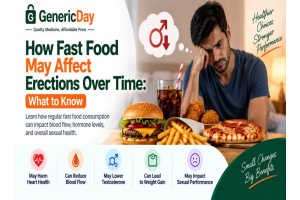
How Fast Food May Affect Erections Over Time: What to Know
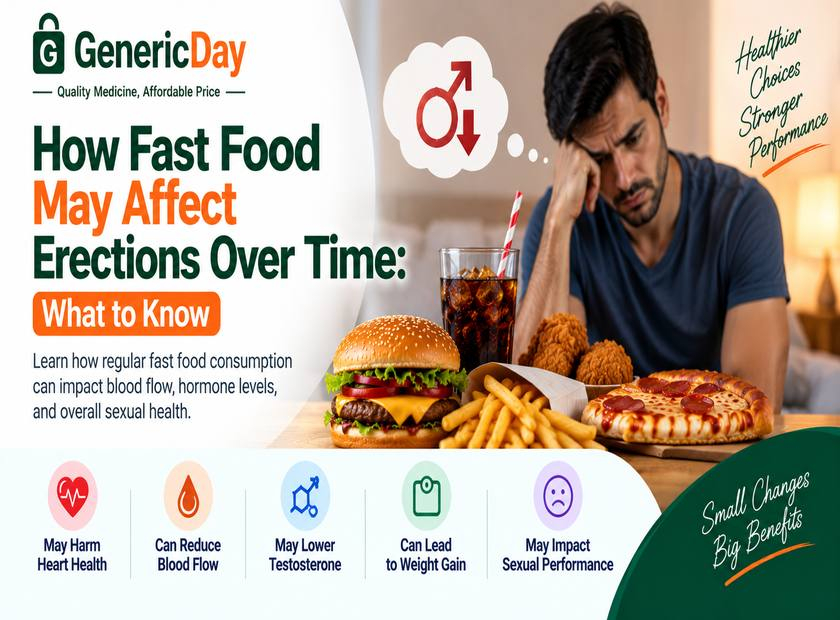
That burger and fries you eat once in a while probably aren't going to ruin your sex life. But what happens when fast food becomes a regular part of your diet?
An occasional pizza, burger, fried chicken, or sugary drink is unlikely to suddenly cause erectile dysfunction. The bigger concern is what can happen when a diet high in highly processed, calorie-dense foods becomes a long-term habit.
Your ability to get and maintain an erection depends on several systems working together—including healthy blood vessels, adequate blood flow, nerves, hormones, psychological health, and overall metabolic health. Conditions such as obesity, diabetes, high blood pressure, and cardiovascular disease are associated with erectile dysfunction (ED).
That is why the relationship between fast food and erections is more complicated than simply saying, “Fast food causes erectile dysfunction.”
A better way to understand it is:
Frequent unhealthy eating → higher risk of metabolic and cardiovascular problems → impaired blood-vessel health → potentially poorer erectile function.
The good news is that diet is also one area where long-term lifestyle changes may help. The National Institute of Diabetes and Digestive and Kidney Diseases (NIDDK) notes that a healthy diet can lower the risk of developing ED or improve ED symptoms, while foods associated with diabetes, heart disease, and obesity can increase ED risk.
So, how does fast food affect erections over time? Let's look at the science, the possible mechanisms, and what you can do to support better sexual and cardiovascular health.
What Is Erectile Dysfunction?
Before discussing fast food and erectile function, it helps to understand what erectile dysfunction actually means.
Erectile dysfunction is the inability to get or keep an erection firm enough for satisfactory sexual activity. It can happen occasionally, but persistent or recurrent problems may indicate an underlying health issue.
ED is not simply a problem of sexual desire. An erection involves a coordinated response involving the brain, nerves, hormones, blood vessels, and penile tissue.
According to NIDDK, potential contributors to Erectile Dysfunction include:
- Diabetes
- Obesity and overweight
- Heart and blood-vessel disease
- High blood pressure
- Hormonal problems
- Certain medications
- Anxiety, depression, and stress
- Smoking
- Excessive alcohol consumption
- Physical inactivity
This is important because several of these factors can also be influenced by long-term dietary habits.
Can Fast Food Affect Erections Over Time?
Yes, frequent consumption of an unhealthy diet may contribute to factors associated with erectile dysfunction—but fast food should not be described as a direct, guaranteed cause of ED.
A single fast-food meal doesn't suddenly damage the blood vessels in your penis.
The concern is long-term dietary pattern.
If someone regularly consumes foods that are high in calories, saturated fat, sodium, added sugar, and refined carbohydrates while eating relatively few vegetables, fruits, whole grains, legumes, and other nutrient-rich foods, that overall pattern may contribute to poor metabolic and cardiovascular health.
NIDDK specifically recommends limiting foods high in saturated fat, fried foods, refined carbohydrates, sodium, and added sugars when addressing erectile health.
Over time, poor dietary habits can contribute to:
- Excess body weight
- High blood pressure
- Abnormal cholesterol levels
- Poor blood-sugar control
- Insulin resistance
- Cardiovascular disease
- Metabolic problems
These conditions can affect the blood vessels and other systems involved in erections.
So the more accurate statement is:
Fast food may affect erectile health indirectly by contributing to health conditions and lifestyle patterns that are associated with ED.
Why Do You Need Good Blood Flow for an Erection?
Blood flow is central to erectile function.
During sexual stimulation, signals from the nervous system cause the smooth muscle in penile blood vessels and erectile tissue to relax. This allows increased blood flow into the penis. The resulting pressure helps produce and maintain an erection.
That means healthy blood vessels are extremely important.
If the cardiovascular system is unhealthy, the mechanisms required for an erection can also be affected.
This helps explain why erectile dysfunction and cardiovascular health are closely connected.
NIDDK identifies heart and blood-vessel diseases, atherosclerosis, and high blood pressure among conditions that can contribute to ED.
Why this matters for diet
Diet affects many of the risk factors that influence cardiovascular health.
For example, dietary patterns can influence:
- Body weight
- Blood pressure
- Blood glucose
- Cholesterol
- Overall cardiovascular risk
The American Heart Association's 2026 dietary guidance emphasizes vegetables and fruits, whole grains, healthy protein sources, unsaturated fats, minimally processed foods, and reduced intake of added sugars and sodium as features of a heart-healthy dietary pattern.
Because erectile function relies heavily on vascular health, supporting cardiovascular health is also relevant to sexual health.
How Fast Food May Affect Blood Flow
One of the biggest reasons researchers and health professionals focus on diet and erectile function is vascular health.
Many common fast-food meals can be high in calories, sodium, saturated fat, refined carbohydrates, or added sugars. The exact nutritional profile varies considerably from one restaurant and meal to another, so “fast food” is not one single nutritional category.
However, a dietary pattern dominated by these foods may make it harder to maintain healthy body weight and cardiometabolic health.
The American Heart Association recommends choosing minimally processed foods, replacing saturated fats with healthier unsaturated fats, limiting added sugars, and reducing sodium as part of a heart-healthy eating pattern.
A potential long-term pathway looks like this:
Frequent calorie-dense, nutrient-poor meals
↓
Higher risk of weight gain and metabolic problems
↓
Greater cardiovascular risk
↓
Potential impairment of vascular health
↓
Possible effect on erectile function
This does not mean that every person who eats fast food will develop ED. Genetics, age, physical activity, sleep, smoking, alcohol, medications, medical conditions, and psychological factors all matter.
Fast Food, Obesity, and Erectile Dysfunction
Obesity is one of the important health factors associated with erectile dysfunction.
NIDDK lists overweight and obesity among chronic health conditions that can contribute to ED.
Frequent fast-food consumption can make maintaining a healthy weight more difficult when meals consistently provide more energy than the body needs.
This is not about blaming a particular food.
Instead, think about dietary patterns and energy balance.
A meal that is high in calories but low in fiber and micronutrients may not provide the same satiety and nutritional value as a balanced meal containing vegetables, whole grains, legumes, lean protein, and healthy fats.
Over months and years, consistently consuming excess calories can contribute to weight gain.
And weight gain can be relevant to sexual health because it may occur alongside metabolic and cardiovascular risk factors.
The important point
Fast food → obesity → ED is not an automatic chain.
Rather, obesity is one of several recognized risk factors for ED, and frequent consumption of calorie-dense foods can be one contributor to excess energy intake.
Can Fast Food Affect Testosterone?
Fast food and testosterone is another popular search topic.
Testosterone plays an important role in male sexual health, but it is only one part of erectile function.
It would be inaccurate to say that eating a burger or fries directly causes low testosterone.
Testosterone levels can be influenced by many factors, including:
- Age
- Body composition
- Sleep
- Physical activity
- Overall health
- Certain medications
- Hormonal conditions
- Metabolic health
NIDDK identifies hormone issues, including low testosterone, as one possible contributor to ED, but ED has many potential causes.
NIDDK also notes that maintaining a healthy weight may improve testosterone levels and help prevent ED, while a healthy weight can also reduce the risk of diabetes and high blood pressure.
Therefore, rather than asking whether junk food directly lowers testosterone, it is more useful to ask whether an overall unhealthy lifestyle may contribute to metabolic or hormonal problems.
Can Too Much Sugar Affect Erectile Function?
Sugary drinks, desserts, sauces, and other foods containing substantial amounts of added sugar can contribute significantly to total calorie intake.
Over time, excessive intake of added sugars can make maintaining a healthy dietary pattern and body weight more difficult.
Metabolic health is relevant to sexual health because diabetes is a recognized risk factor for erectile dysfunction.
NIDDK explains that diabetes can affect blood vessels, nerves, hormones, and emotional health, all of which can make satisfactory sexual function more difficult.
This does not mean that eating sugar once causes erectile dysfunction.
The concern is long-term dietary patterns and metabolic health.
If someone frequently consumes sugary drinks alongside high-calorie fast food and has little physical activity, the overall pattern may be more important than any individual food.
What About Fried Foods?
Fried foods are another major part of the conversation around unhealthy diet and erectile dysfunction.
Many fried foods can contain substantial amounts of calories and saturated fat, depending on the food and preparation method.
NIDDK specifically recommends limiting foods high in saturated fats, including fried foods, as part of dietary guidance for people concerned about ED.
The American Heart Association also recommends limiting saturated fat and choosing healthier unsaturated fats instead.
Again, the goal isn't to label every fried food as dangerous.
Instead, consider frequency.
Having fried food occasionally is very different from relying on fried meals as a major part of your diet every day.
Can Processed Food Affect Male Sexual Health?
The phrase processed food and erectile dysfunction can be misleading because processing itself is not necessarily harmful.
Many foods are processed in some way.
For example, frozen vegetables, plain yogurt, canned beans, and whole-grain bread can all be convenient parts of a healthy diet.
The more relevant question is the overall nutritional profile and dietary pattern.
The American Heart Association's current dietary guidance recommends choosing minimally processed foods more often and minimizing ultraprocessed foods, while also emphasizing vegetables, fruits, whole grains, healthy proteins, and unsaturated fats.
Therefore, the goal shouldn't be “never eat processed food.”
Instead:
Build your everyday diet around nutrient-rich foods and make highly processed, calorie-dense foods a smaller part of the overall pattern.
Fast Food and Cardiovascular Health: Why It Matters for Erections
Your heart and blood vessels do much more than support physical activity.
They also play an important role in sexual function.
Conditions such as high blood pressure, atherosclerosis, diabetes, and other cardiovascular problems can contribute to erectile dysfunction.
This makes cardiovascular health one of the most important semantic connections for an article about fast food and erectile dysfunction.
A diet that supports heart health generally emphasizes:
- Vegetables and fruits
- Whole grains
- Beans and legumes
- Fish and other healthy protein sources
- Nuts and seeds
- Unsaturated fats
- Minimally processed foods
The American Heart Association recommends this type of overall dietary pattern while emphasizing reduced intake of added sugars, sodium, saturated fat, and highly processed foods.
The Fast Food → Erectile Health Connection Explained
| Factor | Possible long-term concern | Relevance to erections |
|---|---|---|
| High-calorie diet | Weight gain and obesity | Obesity is associated with ED |
| High sodium intake | Higher blood-pressure risk | High blood pressure can contribute to ED |
| High added sugar intake | Poor metabolic health | Diabetes is a risk factor for ED |
| High saturated-fat intake | Unfavorable cardiovascular risk | Vascular health is important for erections |
| Low intake of whole foods | Lower overall diet quality | Healthy dietary patterns are associated with better health |
The table shows why the issue is best understood as a long-term health pathway, not as “one fast-food meal equals erectile dysfunction.”
How Long Does an Unhealthy Diet Take to Affect Erectile Function?
There is no universal timeline.
You cannot accurately say:
“Eat fast food for five years and you will develop ED.”
Individual responses vary widely.
Some people may develop cardiovascular or metabolic problems relatively early, while others may remain healthy despite occasional unhealthy eating.
The more important question is whether poor eating habits contribute over time to conditions that can affect erectile function.
Think in terms of long-term patterns:
- One meal: unlikely to determine your long-term erectile health.
- Occasional fast food: can fit into many people's overall diets without automatically causing ED.
- Frequent fast food: may make healthy weight and nutrition harder to maintain.
- Long-term poor diet plus inactivity: may increase cardiometabolic risk.
- Established diabetes, obesity, hypertension, or cardiovascular disease: can increase the likelihood of erectile problems.
This is why the phrase “over time” is important in the article's primary keyword.
Can an Unhealthy Diet Cause Erectile Dysfunction?
A poor diet should not be treated as the only possible cause.
However, dietary habits can influence several conditions associated with ED.
NIDDK states that foods that increase the risk of diabetes, heart disease, and obesity can also increase the chance of ED.
This provides a useful way to explain the relationship:
Diet may influence the health conditions that influence erectile function.
Other causes may include:
- Cardiovascular disease
- Diabetes
- Hormonal problems
- Nerve disorders
- Certain medications
- Anxiety
- Depression
- Stress
- Smoking
- Excessive alcohol use
- Physical inactivity
So if someone has erectile difficulties, changing their diet may be helpful, but it shouldn't replace medical evaluation when symptoms persist.
Can Changing Your Diet Improve Erectile Function?
There is evidence suggesting that healthier dietary patterns can be beneficial for erectile health.
NIDDK states that a healthy diet can lower the risk of developing ED or improve ED symptoms.
Research on Mediterranean-style dietary patterns has also reported associations with better erectile function, with proposed mechanisms including improved metabolic and vascular health.
More recent evidence continues to investigate the relationship. A 2026 review reported that many studies found an association between greater adherence to a Mediterranean dietary pattern and better sexual function, while also noting that more research is needed to establish causality and provide detailed recommendations.
Practical dietary changes include:
- Eat more vegetables and fruits.
- Choose whole grains more often than refined grains.
- Include beans, lentils, nuts, fish, and other healthy protein sources.
- Replace some foods high in saturated fat with sources of unsaturated fat.
- Reduce frequent consumption of sugary drinks and highly processed foods.
These recommendations are consistent with current heart-healthy dietary guidance.
What Foods May Support Erectile and Cardiovascular Health?
There is no single “magic food” that guarantees stronger erections.
Instead, focus on a dietary pattern that supports cardiovascular and metabolic health.
Foods to include more often
- Vegetables: leafy greens, broccoli, peppers, tomatoes, and other colorful vegetables.
- Fruits: berries, oranges, apples, bananas, and other whole fruits.
- Whole grains: oats, brown rice, whole-grain bread, and similar options.
- Healthy proteins: beans, lentils, fish, nuts, seeds, and lean protein sources.
- Healthy fats: foods containing unsaturated fats, such as nuts, seeds, fish, and plant oils.
The American Heart Association recommends a wide variety of vegetables and fruits, whole grains, healthy protein sources, and unsaturated fats as components of a heart-healthy eating pattern.
5 Practical Ways to Reduce the Impact of Fast Food on Your Diet
You don't necessarily need to completely eliminate restaurant food.
The goal is to improve the overall balance of your diet.
1. Reduce frequency
If fast food is currently an everyday habit, gradually reducing how often you eat it can be a realistic first step.
2. Improve the meal
Choose options with more vegetables, leaner proteins, whole grains where available, and less added sugar or sodium.
3. Watch liquid calories
Sugary drinks can add significant calories without providing much satiety.
4. Increase whole foods
Make fruits, vegetables, legumes, whole grains, nuts, seeds, and other nutrient-rich foods a regular part of your meals.
5. Combine diet with movement
Physical activity supports cardiovascular health, blood flow, and healthy body weight. NIDDK specifically notes that physical activity can increase blood flow throughout the body, including the penis, while helping maintain a healthy weight.
Diet Is Only One Piece of Erectile Health
If someone is worried about erectile function, focusing entirely on fast food can miss other important factors.
ED can involve physical, psychological, hormonal, neurological, and lifestyle factors.
Other important areas include:
- Regular physical activity
- Healthy body weight
- Adequate sleep
- Stress management
- Not smoking
- Limiting excessive alcohol
- Managing diabetes
- Managing blood pressure
- Managing cholesterol
- Reviewing medications with a healthcare professional
NIDDK identifies several of these factors as relevant to ED risk and management.
This broader perspective is particularly important because someone can eat relatively well and still experience ED because of another medical or psychological cause.
Can Losing Weight Improve Erectile Function?
For people who are overweight or have obesity, improving body weight and metabolic health may be relevant to erectile function.
NIDDK notes that maintaining a healthy weight can help prevent conditions such as diabetes and high blood pressure, which can cause ED, and may also improve testosterone levels and self-esteem.
However, weight loss should not be treated as a guaranteed cure.
A person's erectile difficulties may have multiple causes, and appropriate treatment depends on the underlying problem.
The most useful goal is therefore not simply “lose weight for better erections,” but:
Improve cardiovascular fitness, metabolic health, nutrition, physical activity, and overall well-being.
Better sexual health may be one of several potential benefits.
When Should You Talk to a Doctor About Erectile Problems?
Occasional difficulty getting an erection can happen for many reasons, including stress, fatigue, alcohol, or anxiety.
But persistent or recurrent erectile difficulties deserve attention.
ED can sometimes be an early sign of an underlying health problem, particularly because conditions affecting blood vessels, diabetes, obesity, and high blood pressure are associated with erectile dysfunction.
Consider speaking with a healthcare professional if:
- Erectile problems happen repeatedly.
- You cannot maintain an erection consistently.
- Your symptoms are getting worse.
- You have diabetes, high blood pressure, or cardiovascular risk factors.
- You also experience reduced libido or other hormonal symptoms.
- Erectile difficulties are causing significant stress or relationship problems.
For men diagnosed with erectile dysfunction, a healthcare professional may recommend prescription treatments when appropriate.
Cenforce 150 contains sildenafil, a PDE5 inhibitor used to treat erectile dysfunction by helping increase blood flow to the penis during sexual stimulation. It should be used only with appropriate medical guidance because it may not be suitable for everyone or may interact with certain medicines.
A healthcare professional can help determine whether the issue is related to cardiovascular health, hormones, medications, mental health, lifestyle factors, or another medical condition.
Frequently Asked Questions
1. Can fast food cause erectile dysfunction?
Frequent unhealthy eating may contribute to risk factors associated with ED, such as obesity, diabetes, and cardiovascular disease. However, fast food is not a guaranteed direct cause of erectile dysfunction.
2. How does fast food affect erections over time?
A diet frequently high in calories, saturated fat, sodium, added sugars, and refined carbohydrates may contribute to metabolic and cardiovascular problems that can affect erectile function.
3. Does junk food affect erectile function?
It can potentially contribute indirectly when it forms a large part of an unhealthy dietary pattern. Overall cardiovascular and metabolic health are important for erectile function.
4. Can fast food lower testosterone?
There is no simple evidence that eating fast food directly causes low testosterone. Testosterone is influenced by factors including age, body weight, sleep, physical activity, overall health, and hormonal conditions.
5. Can an unhealthy diet reduce blood flow to the penis?
An unhealthy dietary pattern can contribute to cardiovascular risk factors that affect blood-vessel health. Because erections depend on adequate penile blood flow, vascular health is important for erectile function.
6. What foods are bad for erectile function?
Frequently eating large amounts of foods high in saturated fat, added sugars, sodium, and refined carbohydrates may be unfavorable for the health conditions associated with ED. NIDDK recommends limiting these foods as part of dietary management.
7. What foods are good for erectile health?
Vegetables, fruits, whole grains, legumes, nuts, fish, and other minimally processed foods can form part of a heart-healthy dietary pattern that supports overall cardiovascular health.
8. Can losing weight improve erections?
For people who are overweight or have obesity, achieving a healthier weight may improve factors associated with erectile function and reduce the risk of conditions such as diabetes and high blood pressure.
9. How long does an unhealthy diet take to affect erectile function?
There is no fixed timeline. Erectile health depends on many factors, and dietary effects are better understood through long-term changes in metabolic and cardiovascular health rather than a specific number of days or years.
10. Can changing your diet help erectile dysfunction?
It may help, particularly when poor diet is contributing to obesity or cardiovascular and metabolic risk factors. However, persistent ED can have many causes and should be medically evaluated.
Conclusion: How Fast Food May Affect Erections Over Time
So, how fast food may affect erections over time is ultimately a story about more than burgers, fries, pizza, or sugary drinks.
An occasional fast-food meal does not automatically cause erectile dysfunction. The bigger concern is what happens when an unhealthy dietary pattern becomes routine and contributes to excess weight, poor metabolic health, high blood pressure, diabetes, abnormal cholesterol, or cardiovascular disease.
Those conditions matter because healthy blood vessels and adequate blood flow are essential for normal erectile function.
The evidence also points toward a more positive message: improving diet can be part of improving overall health and may support erectile function. NIDDK recommends healthy eating as part of ED prevention and management, while current American Heart Association guidance emphasizes vegetables, fruits, whole grains, healthy protein, unsaturated fats, minimally processed foods, and reduced intake of added sugars and sodium.
A practical approach is not to fear every fast-food meal. Instead, look at your overall dietary pattern.
Make nutrient-rich foods the foundation of your diet, stay physically active, maintain a healthy weight, prioritize sleep, avoid smoking, manage alcohol intake, and pay attention to blood pressure, cholesterol, and blood sugar.
And if erectile problems persist, don't automatically blame your diet. Erectile dysfunction can have multiple causes and may sometimes signal an underlying health condition that deserves professional evaluation.