Can Low Sunlight Exposure Affect Sexual Performance
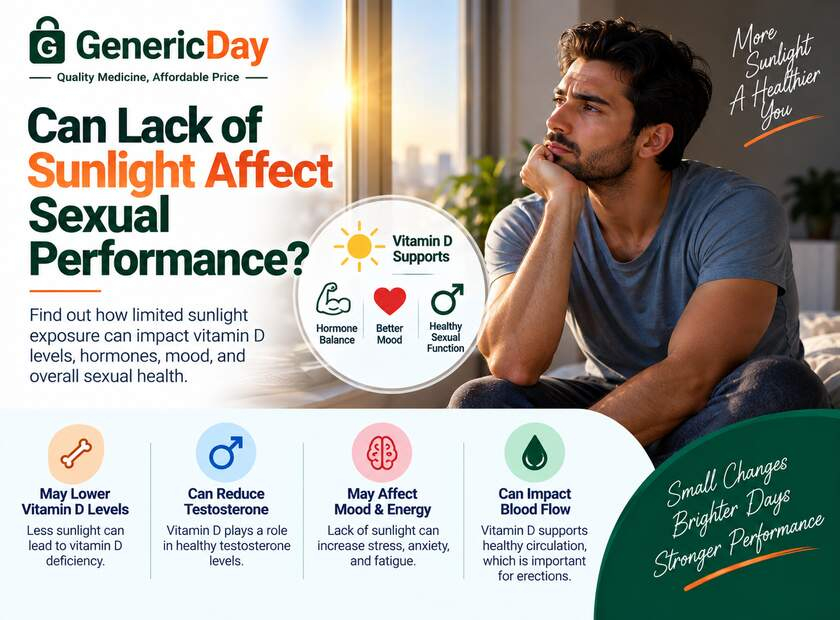
What if something as simple as spending too little time in the sun could be connected to your sexual health?
It may sound surprising, but sunlight plays an important role in the body's production of vitamin D, and vitamin D is involved in several processes related to overall health. Researchers have investigated whether low vitamin D levels are associated with erectile dysfunction, testosterone levels, libido, blood-vessel health, mood, and other factors that can influence sexual performance.
But there is an important distinction: lack of sunlight is not proven to directly cause sexual performance problems. Instead, insufficient sunlight may contribute to low vitamin D status, while vitamin D deficiency may occur alongside other health conditions that are also associated with sexual dysfunction.
For men experiencing erectile problems or low sex drive, understanding this connection can be useful—but it should not replace a medical evaluation.
Can Lack of Sunlight Affect Sexual Performance?
Possibly, but usually indirectly. Low sunlight exposure can reduce the skin's ability to produce vitamin D. Low vitamin D status has been associated in some studies with erectile dysfunction and other aspects of men's health.
Sexual performance is influenced by many interconnected factors, including:
- Blood circulation and cardiovascular health
- Hormones such as testosterone
- Mental health, stress, and anxiety
- Sleep quality and circadian rhythms
- Physical activity and body weight
- Diabetes and metabolic health
- Prescription medications and other medical conditions
Therefore, it is more accurate to say that low sunlight exposure may contribute to factors associated with sexual health, rather than saying that a lack of sunlight directly causes erectile dysfunction.
One U.S. study using nationally representative NHANES data found that men with vitamin D deficiency had a higher prevalence of erectile dysfunction than men with adequate vitamin D levels.
However, an association does not prove that vitamin D deficiency itself causes Erectile Dysfunction.
That distinction matters when interpreting the research.
How Does Sunlight Connect to Sexual Health?
Sunlight affects the body in several ways. One of the best-known effects is its role in vitamin D production.
When ultraviolet B (UVB) radiation reaches exposed skin, the body can produce vitamin D. Vitamin D then undergoes additional processing in the liver and kidneys to become biologically active.
This matters because vitamin D receptors are found in many tissues throughout the body.
Researchers have therefore explored possible connections between vitamin D and:
- Vascular function
- Inflammation
- Hormonal regulation
- Muscle function
- Immune function
- Mood
- Cardiometabolic health
Some of these systems are also relevant to sexual function.
The important takeaway
Sunlight should not be considered a treatment for erectile dysfunction. Instead, maintaining adequate vitamin D status is one component of overall health.
If you have persistent erection problems, low libido, or other sexual health concerns, addressing possible vitamin D deficiency may be worth discussing with a healthcare professional—but other causes should also be evaluated.
Vitamin D and Erectile Dysfunction: What Does the Research Say?
The relationship between vitamin D deficiency and erectile dysfunction has attracted considerable scientific interest.
Erections depend heavily on healthy blood vessels. During sexual stimulation, blood vessels in the penis need to relax and allow increased blood flow. The endothelium—the inner lining of blood vessels—plays an important role in this process.
Vitamin D has been studied in relation to endothelial function, inflammation, and cardiovascular health. Because vascular problems can contribute to erectile dysfunction, researchers have investigated whether low vitamin D could be associated with ED.
A U.S. analysis of men participating in NHANES found that vitamin D deficiency was associated with a greater likelihood of erectile dysfunction, particularly among men with more severe ED.
However, this type of observational evidence cannot establish a cause-and-effect relationship.
For example, men with low vitamin D may also have:
- Less physical activity
- Higher body weight
- Diabetes
- Cardiovascular risk factors
- More time spent indoors
- Other chronic health conditions
Any of these factors could independently influence erectile function.
Does vitamin D deficiency cause erectile dysfunction?
Not necessarily. Current evidence supports a possible relationship between vitamin D status and erectile function, but vitamin D deficiency should not automatically be considered the cause of ED.
This is why a healthcare professional may look at several factors rather than focusing on one vitamin or lifestyle habit.
Can Low Vitamin D Affect Libido?
Libido, or sexual desire, is different from erectile function.
A person can have normal erections but experience low sexual desire. Another person can have strong sexual desire but have difficulty achieving or maintaining an erection.
Possible contributors to low libido include:
- Low testosterone
- Depression or anxiety
- Chronic stress
- Poor sleep
- Relationship difficulties
- Certain medications
- Alcohol or drug use
- Chronic illnesses
- Hormonal disorders
Research into vitamin D and libido is less conclusive than many online articles suggest.
Low vitamin D can be a marker of poor overall health, but it is not established as a universal cause of low sex drive.
If you notice a persistent reduction in sexual desire, it is worth considering the broader picture rather than assuming the problem is simply a lack of sunlight.
Does Sunlight Increase Testosterone?
This is one of the most commonly searched questions about sunlight and men's sexual health.
The answer is more complicated than many social-media claims suggest.
Testosterone is a hormone involved in sexual desire, muscle mass, bone health, and reproductive function. Low testosterone can contribute to reduced libido and other symptoms in some men.
Researchers have investigated the relationship between vitamin D and testosterone, but studies have produced mixed findings. Some observational research has reported an association between vitamin D status and testosterone, while intervention studies have not consistently shown that taking vitamin D substantially increases testosterone in otherwise healthy men.
Therefore:
Getting sunlight is not a proven method for significantly increasing testosterone.
If you have symptoms of low testosterone, appropriate blood testing and medical evaluation are more useful than attempting to increase testosterone through sun exposure alone.
Sunlight, Blood Flow, and Erectile Function
A healthy erection requires adequate blood flow.
The process involves complex interactions between the brain, nerves, hormones, blood vessels, and penile tissue.
Nitric oxide is one important signaling molecule involved in the relaxation of blood vessels during an erection.
This is why vascular health and erectile function are closely connected.
Conditions that damage blood vessels—such as:
- High blood pressure
- Diabetes
- High cholesterol
- Obesity
- Smoking
- Cardiovascular disease
can also increase the risk of erectile dysfunction.
Vitamin D has been studied in connection with endothelial function and cardiovascular health. This provides one possible biological pathway researchers have considered when examining vitamin D and erectile dysfunction.
However, a biological mechanism is not the same thing as proof that increasing sunlight exposure will treat Erectile Dysfunction.
Lack of Sunlight, Mood, and Sexual Performance
Sexual performance isn't only physical.
Mental health can have a major influence on sexual desire and erectile function.
Limited sunlight exposure may be relevant to mood and sleep, particularly in people who spend most of their time indoors or experience seasonal changes in daylight.
Stress and anxiety can affect sexual performance by increasing psychological pressure and interfering with sexual arousal.
Depression can also be associated with reduced libido and sexual difficulties.
In addition, some medications used to treat mental-health conditions can affect sexual function.
This means that a person's sexual health may be influenced by a combination of physical and psychological factors rather than a single nutrient.
Sunlight and circadian rhythm
Light exposure helps regulate the body's circadian rhythm—the internal system that helps coordinate sleep and wakefulness.
Poor sleep can affect energy, mood, hormone regulation, and sexual desire.
For this reason, adequate daytime light exposure can be part of a healthy lifestyle, even though that does not mean sunlight is a direct treatment for sexual dysfunction.
Can Lack of Sunlight Lower Testosterone?
There is not enough evidence to say that simply getting less sunlight directly causes clinically low testosterone.
A more accurate chain is:
Lower sunlight exposure → potentially lower vitamin D production → possible association with broader health factors → potential relationship with sexual health.
That is different from:
Less sunlight → low testosterone → erectile dysfunction.
The second pathway is too simplistic and is not established by current evidence.
Men concerned about testosterone should consider symptoms and medical testing rather than assuming sunlight exposure is the cause.
How Much Sunlight Do You Need for Vitamin D?
There is no universal number of minutes that works for everyone.
Vitamin D production from sunlight varies depending on:
- Skin pigmentation
- Geographic location
- Season
- Time of day
- Age
- Clothing
- Sunscreen use
- Cloud cover
- Air pollution
- Amount of skin exposed
For people in the United States, sunlight availability can vary substantially between regions and seasons.
People living farther north may have less UVB exposure during parts of winter, while people with darker skin generally produce vitamin D less efficiently from the same amount of UVB exposure.
At the same time, deliberately seeking excessive UV exposure is not a good strategy for improving sexual health because ultraviolet radiation increases skin-cancer risk.
For vitamin D, food and supplements may be appropriate options for some people, particularly when dietary intake or sunlight exposure is insufficient.
Vitamin D Sources: Sunlight, Food, and Supplements
Sunlight is only one source of vitamin D.
Vitamin D can also come from certain foods and supplements.
| Source | Examples | Key consideration |
|---|---|---|
| Sunlight | UVB exposure | Variable and carries UV-related skin risks |
| Fatty fish | Salmon, trout, sardines | Provides vitamin D plus other nutrients |
| Fortified foods | Milk and some plant-based alternatives | Amount varies by product |
| Egg yolks | Eggs | Contains smaller amounts |
| Supplements | Vitamin D3/D2 | Useful for some people when intake is inadequate |
A blood test can help determine vitamin D status when deficiency is suspected.
It is also important not to assume that more vitamin D is always better. Excessive supplementation can cause health problems.
Vitamin D Deficiency Symptoms in Men
Vitamin D deficiency does not necessarily cause obvious symptoms.
When symptoms occur, they can be nonspecific and may include:
- Fatigue
- Muscle weakness
- Bone or muscle discomfort
- Reduced physical performance
- Mood changes
These symptoms can have many other causes.
Importantly, erectile dysfunction is not a specific symptom of vitamin D deficiency.
If you are experiencing ED, low libido, or changes in sexual performance, testing vitamin D may be appropriate in certain situations, but a broader evaluation may be needed.
Other Causes of Erectile Dysfunction
One of the biggest mistakes people make is assuming that erectile dysfunction has one simple cause.
ED can be associated with a wide range of physical and psychological conditions.
Common contributors include:
- Cardiovascular disease
- High blood pressure
- Diabetes
- Obesity
- Low testosterone or other hormonal problems
- Smoking
- Excessive alcohol use
- Certain prescription medications
- Anxiety and depression
- Relationship stress
- Nerve disorders
- Sleep disorders
Because blood-vessel health is important for erections, ED can sometimes be an early sign of underlying cardiovascular or metabolic problems.
For this reason, persistent erectile difficulties deserve medical attention rather than being dismissed as a normal part of aging.
Does Vitamin D Improve Erectile Dysfunction?
This is where it is important to separate association from treatment.
Some observational studies have found that men with lower vitamin D levels are more likely to have ED. That does not necessarily mean that vitamin D supplementation will restore erectile function.
Clinical trials and reviews have produced mixed results.
A systematic review of the available evidence found that the relationship between vitamin D and ED remains uncertain and that more high-quality research is needed.
More recent clinical research continues to investigate whether vitamin D supplementation could have a role as an adjunct to other ED treatments.
The practical conclusion is:
Correcting a genuine vitamin D deficiency may be beneficial for overall health, but vitamin D should not be promoted as a stand-alone treatment for erectile dysfunction.
Cenforce 100 for Erectile Dysfunction
For men experiencing erectile dysfunction, treatment may involve lifestyle changes, addressing underlying health conditions, or prescription medications when appropriate. Cenforce 100mg is a sildenafil-based ED medicine that is used to help improve blood flow to the penis during sexual stimulation. It should be used according to medical advice, particularly because the appropriate dose can vary from person to person.
Vitamin D deficiency should not be assumed to be the primary cause of ED, and correcting a deficiency does not necessarily replace established ED treatments. Men considering sildenafil should discuss their medical history, current medications, and cardiovascular health with a qualified healthcare professional before use. Sildenafil is not suitable for everyone, including people taking nitrate medicines.
Can Vitamin D Supplements Help Sexual Performance?
If blood testing shows vitamin D deficiency, a healthcare professional may recommend supplementation. However, taking large amounts of vitamin D without medical guidance is not recommended. The goal should be to maintain an appropriate vitamin D level rather than taking increasingly high doses in the hope of improving testosterone, libido, or erections.
For men who continue to experience erectile difficulties, prescription ED treatments may also be discussed with a healthcare professional. Cenforce 150mg contains sildenafil and is a higher-strength option that should not be taken simply because a lower dose has not produced the desired result. A healthcare professional can determine whether sildenafil is appropriate and what dose is suitable based on individual health factors.
If sexual performance is your primary concern, treatment should focus on identifying the underlying cause. Depending on the situation, a healthcare professional may evaluate:
- Blood pressure
- Blood glucose
- Cholesterol
- Testosterone and other hormones
- Medications
- Mental health
- Sleep
- Cardiovascular risk
- Lifestyle factors
Lifestyle Habits That Support Sexual Health
Rather than focusing on sunlight alone, consider sexual health as part of overall physical health.
Helpful habits can include:
- Exercising regularly
- Maintaining a healthy weight
- Eating a balanced diet
- Getting adequate sleep
- Managing stress
- Avoiding tobacco
- Limiting excessive alcohol
- Managing diabetes and blood pressure
- Spending appropriate time outdoors during daylight
- Addressing relationship or psychological concerns when relevant
These habits support cardiovascular and metabolic health, which are important for normal sexual function.
Cenforce 200 and Erectile Dysfunction Treatment
Cenforce 200mg contains a higher amount of sildenafil and should only be considered when a healthcare professional determines that this strength is appropriate. A higher sildenafil dose does not automatically mean a stronger or longer-lasting erection, and increasing the dose without medical guidance can increase the risk of side effects.
Men using sildenafil should follow the prescribed instructions and should not combine it with nitrate medicines used for chest pain. Certain medical conditions and medications may also affect whether sildenafil is appropriate. If erectile difficulties continue despite treatment, speaking with a healthcare professional can help identify whether the dose, medication, or underlying cause needs further evaluation.
Medication is only one part of managing erectile dysfunction. Maintaining a healthy weight, exercising regularly, getting adequate sleep, managing stress, and controlling conditions such as diabetes and high blood pressure can also support overall sexual health.
When Should You See a Doctor?
Occasional changes in sexual performance can happen for many reasons, including stress, fatigue, alcohol, or relationship circumstances.
However, persistent or recurring problems should not be ignored.
Consider talking with a healthcare professional if:
- Erectile difficulties happen repeatedly
- Your libido has changed significantly
- You have symptoms associated with low testosterone
- You have diabetes, high blood pressure, or cardiovascular risk factors
- You take medications that may affect sexual function
- Sexual difficulties are causing significant distress
- You are concerned about vitamin D deficiency
A healthcare professional can determine whether testing or further evaluation is appropriate.
The Connection Between Sunlight and Sexual Performance: Quick Comparison
| Factor | Possible connection | What the evidence means |
|---|---|---|
| Sunlight | Supports natural vitamin D production | Exposure varies and should not be excessive |
| Vitamin D | Studied in relation to ED and hormones | Association does not prove causation |
| Testosterone | Important for libido and sexual health | Sunlight is not a proven testosterone treatment |
| Blood flow | Essential for erections | Vascular health is strongly relevant to ED |
| Mood & sleep | Can influence libido and performance | Daylight may support healthy sleep patterns |
Frequently Asked Questions
1. Can lack of sunlight affect sexual performance?
Possibly indirectly. Low sunlight exposure can contribute to inadequate vitamin D production and may also be associated with lifestyle, sleep, and mood factors. However, lack of sunlight is not established as a direct cause of sexual dysfunction.
2. Can lack of sunlight cause erectile dysfunction?
There is no strong evidence that lack of sunlight directly causes ED. Research has found an association between vitamin D deficiency and erectile dysfunction, but other health factors may explain part of that relationship.
3. Does vitamin D deficiency cause erectile dysfunction?
Vitamin D deficiency may be associated with ED, but it has not been established as a direct cause. Men with persistent ED should be evaluated for cardiovascular, metabolic, hormonal, psychological, and medication-related factors.
4. Can low vitamin D affect libido?
Possibly, but the evidence is not conclusive. Libido can be influenced by testosterone, stress, depression, sleep, medications, chronic illness, and relationship factors.
5. Does sunlight increase testosterone?
There is insufficient evidence to conclude that ordinary sunlight exposure reliably increases testosterone to a clinically meaningful degree. Vitamin D and testosterone have been studied together, but results are inconsistent.
6. Does vitamin D improve erectile function?
Research is still developing. Some studies suggest a relationship between vitamin D status and erectile function, but vitamin D supplementation has not been established as a reliable stand-alone treatment for ED.
7. How much sunlight do you need for vitamin D?
There is no single amount that applies to everyone. Vitamin D production depends on skin type, season, location, time of day, clothing, and other factors. Excessive UV exposure should be avoided because of skin-cancer risk.
8. What are the symptoms of vitamin D deficiency in men?
Symptoms can include fatigue, muscle weakness, and bone or muscle discomfort, although some people have no obvious symptoms. Sexual dysfunction is not a specific diagnostic symptom of vitamin D deficiency.
9. Can vitamin D supplements improve sexual performance?
Supplements can correct vitamin D deficiency when it exists, but they should not be assumed to improve sexual performance. Persistent ED or low libido requires evaluation for other possible causes.
10. What else can cause erectile dysfunction?
ED can be associated with cardiovascular disease, diabetes, high blood pressure, obesity, hormonal conditions, medications, smoking, alcohol, anxiety, depression, sleep problems, and other health conditions.
Conclusion: Is There a Link Between Sunlight and Sexual Health?
So, can low sunlight exposure affect sexual performance?
The most accurate answer is: it may have an indirect connection, but sunlight itself is not proven to be a treatment for sexual dysfunction.
Sunlight helps the body produce vitamin D, and researchers have found associations between low vitamin D status and erectile dysfunction. Vitamin D is also being studied in relation to vascular health, testosterone, inflammation, mood, and other biological processes that can influence sexual health.
However, sexual performance is complex.
Erectile function and libido can be affected by cardiovascular health, diabetes, hormones, medications, psychological well-being, sleep, physical activity, and many other factors. A low vitamin D level may be one piece of the puzzle rather than the entire explanation.
If you are concerned about low libido, erectile dysfunction, low testosterone, or changes in sexual performance, consider discussing your symptoms with a healthcare professional. If vitamin D deficiency is suspected, appropriate testing can determine whether treatment is necessary.
The goal shouldn't be to chase more sunlight for better sexual performance. Instead, focus on maintaining adequate vitamin D, protecting your skin from excessive UV exposure, supporting cardiovascular health, getting quality sleep, staying physically active, and addressing any underlying medical or psychological issues.