Weekend Alcohol Binge Drinking and Erectile Dysfunction
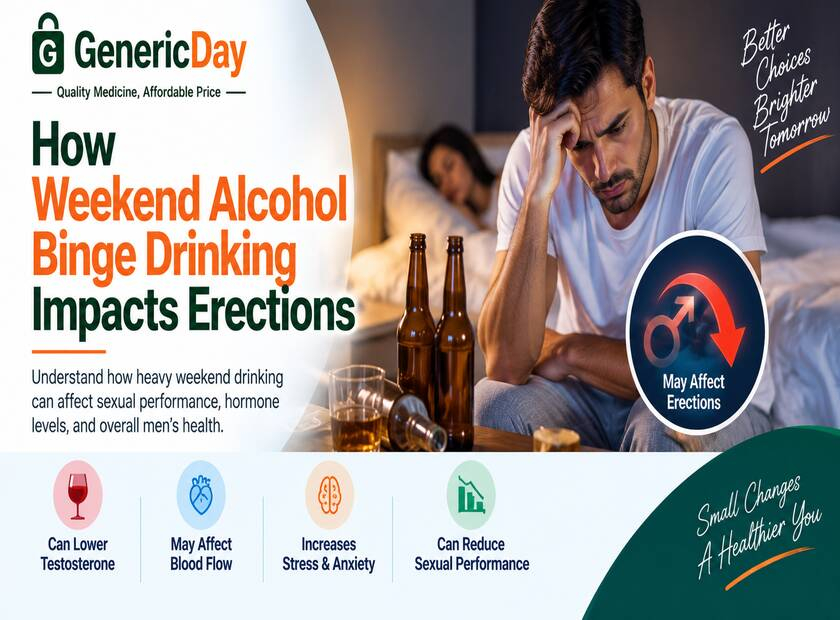
What if the reason you are struggling to get or keep an erection on Saturday night has less to do with attraction and more to do with what you drank earlier that evening?
For many men, weekend drinking is part of their social routine. A few drinks after work can turn into several drinks at a party, followed by another round with friends. The next thing they notice is that sexual arousal feels different, erections are weaker, or maintaining an erection becomes unexpectedly difficult.
This experience is sometimes called “whiskey dick,” but the underlying issue is more than a joke. Alcohol can interfere with the systems that are essential for normal erections, including blood-vessel function, nervous-system signaling, and sexual arousal. Alcohol use is also recognized as a lifestyle factor that can contribute to erectile dysfunction (ED).
The important distinction is that one episode of difficulty after drinking does not automatically mean you have chronic erectile dysfunction. However, repeated weekend binge drinking may become a larger concern, particularly when erection problems continue even when you are sober.
In this guide, we will explain how weekend alcohol binge drinking impacts erections, why alcohol can make it harder to get or maintain an erection, whether alcohol affects testosterone, how long alcohol-related erection problems may last, and what men can do if the problem keeps happening.
What Is Binge Drinking?
Before discussing alcohol and erectile dysfunction, it is important to understand what “binge drinking” actually means.
According to the National Institute on Alcohol Abuse and Alcoholism (NIAAA), binge drinking is a pattern of alcohol consumption that typically raises blood alcohol concentration (BAC) to 0.08% or higher. For a typical adult, this generally corresponds to five or more drinks for men or four or more drinks for women within about two hours.
A weekend drinking pattern can become binge drinking even if someone drinks only once or twice a week.
For example, a person might think:
- “I only drink on Saturdays.”
- “I don't drink every day.”
- “I drink only when I'm with friends.”
- “I exercise during the week, so weekend drinking shouldn't matter.”
But frequency is only part of the picture. How much alcohol you consume and how quickly you consume it also matter.
Heavy drinking is a different but related pattern. NIAAA defines heavy drinking for men as five or more drinks on any day or 15 or more drinks per week; for women, it is four or more drinks on any day or eight or more per week.
How Does Alcohol Affect Erections?
An erection is a physiological process that requires coordination between the brain, nerves, hormones, blood vessels, and penile tissues.
When you become sexually aroused, nerve signals help increase blood flow into the penis. The blood vessels supplying the erectile tissue need to relax and allow sufficient blood to enter. The blood then needs to remain trapped within the erectile tissue long enough to maintain firmness.
Alcohol can interfere with several parts of this process.
1. Alcohol Can Interfere With Nervous-System Signaling
Alcohol is a central nervous system depressant. As alcohol levels rise, it can affect brain function, coordination, judgment, and sexual responses.
You may still feel sexually interested, but the physical response required for an erection may not work normally.
This is one reason why someone can experience:
- Strong sexual desire but a weak erection
- Difficulty becoming fully erect
- Difficulty maintaining an erection
- Delayed sexual response
- Reduced physical sensitivity
So, libido and erection quality are not exactly the same thing.
You can want sex and still have difficulty getting or keeping an erection.
2. Alcohol Can Affect Blood Flow and Vascular Function
Healthy erections depend heavily on blood flow.
Conditions that affect blood vessels can contribute to erectile dysfunction, which is why cardiovascular and metabolic health are closely connected with sexual function. NIDDK notes that diseases and conditions affecting blood vessels, nerves, or hormones can contribute to ED.
Alcohol can produce complex short-term effects on blood vessels and circulation. After heavier drinking, however, the overall physiological effects of intoxication can interfere with normal sexual function.
This is particularly important for men who already have:
- High blood pressure
- Diabetes
- Obesity
- Cardiovascular disease
- Smoking habits
- Poor physical fitness
These conditions themselves can increase the likelihood of erectile dysfunction.
3. Alcohol May Affect Hormonal and Sexual Function
Hormones also play a role in male sexual health.
Alcohol use can affect the function of sexual organs and the production of certain hormones. The CDC specifically notes that alcohol use can contribute to erectile dysfunction in men and fertility problems.
However, it is important not to oversimplify the issue by saying:
“Alcohol automatically lowers testosterone and therefore causes ED.”
Human sexual function is more complicated than that.
Erectile dysfunction can have multiple causes, including physical health conditions, medications, psychological factors, and lifestyle behaviors.
Weekend Binge Drinking vs. Chronic Alcohol-Related ED
Not every alcohol-related erection problem means permanent erectile dysfunction.
There is an important difference between temporary difficulty after drinking and persistent ED.
| Situation | What may happen | What it can mean |
|---|---|---|
| Occasional drinking | Temporary weaker erection | May be related to acute alcohol effects |
| Weekend binge drinking | Repeated erection problems after heavy drinking | Alcohol may be contributing |
| Heavy long-term drinking | Persistent sexual-function problems | Greater concern for chronic health effects |
| ED while completely sober | Difficulty getting/keeping erections without alcohol | Should be evaluated for other causes |
| ED with medical conditions | Problems plus diabetes, hypertension, obesity, etc. | Multiple risk factors may be involved |
NIDDK emphasizes that ED can be associated with blood-vessel, nerve, hormonal, medical, psychological, and lifestyle factors.
Therefore, if erections are consistently weaker even when you have not been drinking, it is worth discussing the problem with a healthcare professional.
Why Can't I Get Hard After Drinking Alcohol?
This is one of the most common questions surrounding alcohol and sexual performance.
The short answer is that alcohol can disrupt several physiological processes required for an erection.
After heavy drinking, you may experience:
- Reduced coordination between sexual stimulation and physical response
- Reduced nervous-system responsiveness
- Difficulty maintaining concentration and arousal
- Changes in circulation
- Fatigue or sleepiness
- Dehydration or hangover symptoms
- Anxiety about sexual performance
The psychological component can also create a cycle.
For example:
Heavy drinking → weak erection → worry about performance → increased anxiety → more difficulty getting an erection.
Stress and anxiety themselves can cause or worsen ED.
This means the problem is not necessarily that alcohol has “damaged” the penis after one night. Instead, several short-term physiological and psychological effects may occur at the same time.
Does Weekend Drinking Lower Testosterone?
This question requires some nuance.
Alcohol can affect hormonal function, but the relationship between alcohol consumption, testosterone, and sexual function depends on factors such as the amount consumed, drinking pattern, overall health, and duration of alcohol exposure.
It is therefore inaccurate to claim that every weekend drinker will develop low testosterone.
What is more established is that alcohol can affect sexual and reproductive health, and excessive alcohol consumption can contribute to erectile dysfunction.
If you are experiencing symptoms that could indicate hormonal problems—such as persistent low libido, fatigue, or ongoing sexual dysfunction a healthcare professional can determine whether hormone testing is appropriate.
How Long Does Alcohol Affect Erections?
No single recovery time applies to everyone.
The effect can vary according to:
- How much alcohol was consumed
- How quickly it was consumed
- Body size and individual metabolism
- Whether food was consumed
- Sleep quality
- Hydration
- Medications
- Existing medical conditions
- Individual sensitivity to alcohol
A man may experience erection difficulties while intoxicated and feel completely normal once sober. Another person may experience sexual-performance problems into the following day, especially if a hangover, poor sleep, or anxiety is involved.
However, persistent erectile dysfunction should not automatically be blamed on alcohol.
If erection problems continue when you are sober or occur regularly, other causes need to be considered.
Can Alcohol Cause Permanent Erectile Dysfunction?
The answer is more nuanced than a simple yes or no.
A single episode of binge drinking does not mean you have permanent ED.
However, repeated heavy alcohol consumption can contribute to health problems that may affect sexual function. Alcohol is recognized as a lifestyle factor associated with ED, and excessive alcohol use can affect multiple aspects of physical health.
The risk becomes more concerning when alcohol use occurs alongside other ED risk factors, such as:
- Diabetes
- High blood pressure
- Obesity
- Smoking
- Cardiovascular disease
- Physical inactivity
- Anxiety or depression
This is why treating the underlying health factors is often more useful than focusing exclusively on erections.
Signs That Alcohol May Be Contributing to Your ED
Alcohol may be a contributing factor if you notice a consistent pattern.
For example:
- You regularly have difficulty getting an erection after heavy drinking.
- You can have normal erections when sober but struggle after binge drinking.
- You frequently lose your erection after several drinks.
- Your sexual performance is worse after weekend drinking.
- Your erection quality improves during periods when you drink less.
- You are drinking heavily and also experiencing other health problems.
Keeping a simple record can sometimes help identify patterns.
Track:
Drinking amount → timing → erection quality → sleep → stress → next-day symptoms.
This does not diagnose ED, but it can give you useful information to discuss with a healthcare professional.
Does Reducing Alcohol Improve Erectile Function?
Reducing or stopping excessive alcohol consumption can be an important lifestyle step, especially when alcohol is contributing to sexual problems.
NIDDK lists limiting or stopping alcohol use among lifestyle changes that healthcare professionals may recommend for people with Impotence. It also recommends physical activity, maintaining a healthy weight, and following a healthy eating pattern.
You do not need to approach the issue as simply “never drink again” without considering your individual situation.
A practical approach may include:
- Reduce the number of drinks consumed in one session.
- Avoid drinking rapidly.
- Avoid binge-drinking patterns.
- Have alcohol-free days.
- Pay attention to whether erection quality improves when drinking is reduced.
- Improve sleep and physical activity.
- Avoid smoking.
- Seek professional support if reducing alcohol is difficult.
For people who regularly drink heavily or may have alcohol dependence, suddenly stopping can sometimes be medically risky. Professional guidance may be appropriate.
Alcohol, Sleep and Erectile Function
Sleep is another factor that is often overlooked.
Weekend binge drinking can disrupt sleep quality even if alcohol initially makes you feel sleepy.
Poor sleep can contribute to fatigue, stress, and reduced sexual performance. If someone repeatedly drinks heavily on Friday and Saturday nights, the effects may extend beyond the period of intoxication.
This can create a cycle:
Weekend binge drinking → poor sleep → fatigue → reduced sexual performance → anxiety → more performance concerns.
Improving sleep is therefore an important part of an overall sexual-health strategy.
Alcohol and Sexual Performance Anxiety
Not every erection problem is purely physical.
Suppose a man has one bad sexual experience after drinking.
The following weekend he may think:
“What if it happens again?”
That thought can increase anxiety.
Anxiety can make it harder to focus on sexual stimulation and may interfere with the physiological processes needed for an erection. NIDDK identifies anxiety, depression, and stress as psychological or emotional factors that can cause or worsen Erectile Dysfunction.
This is why repeatedly testing yourself after drinking can sometimes make the situation worse.
Instead, consider looking at the broader pattern: alcohol consumption, stress, sleep, relationship factors, and general health.
What Can You Do If Weekend Drinking Is Affecting Your Erections?
If you suspect alcohol is affecting your sexual performance, start with the simplest modifiable factor: your drinking pattern.
Practical steps
- Reduce or avoid binge drinking.
- Keep track of how much you drink.
- Avoid drinking quickly.
- Give your body alcohol-free periods.
- Exercise regularly.
- Prioritize sleep.
- Maintain a healthy weight.
- Avoid smoking.
- Manage stress and anxiety.
- Talk to a healthcare professional if ED continues.
NIDDK recommends lifestyle measures such as limiting alcohol, increasing physical activity, maintaining a healthy weight, following a healthy eating plan, and quitting smoking as part of ED management.
If you think you may have alcohol use disorder, don't treat the problem as simply a lack of willpower. Alcohol use disorder is a medical condition, and professional support can help.
When Should You See a Doctor About Erectile Dysfunction?
Occasional difficulty getting an erection is common and does not necessarily mean you have ED.
But persistent or recurring problems deserve attention.
You should consider talking with a healthcare professional if:
- You regularly cannot get or maintain an erection.
- ED happens even when you are completely sober.
- Your libido has changed significantly.
- You have diabetes, high blood pressure, or cardiovascular disease.
- You smoke or use recreational drugs.
- You take medications that may affect sexual function.
- You have other symptoms such as pain or urinary problems.
- Alcohol reduction does not improve persistent ED.
ED can sometimes be an early sign of another health problem. NIDDK notes that ED is not a routine part of aging and can be associated with conditions such as diabetes, heart disease, and obesity.
A healthcare professional can take a medical and sexual history, perform an examination when appropriate and determine whether additional testing is needed.
Frequently Asked Questions About Alcohol and Erections
1. Can binge drinking cause erectile dysfunction?
Yes. Excessive alcohol consumption can contribute to erectile dysfunction. Alcohol may interfere with nervous-system function, sexual arousal, and other processes involved in normal erections.
2. Why can't I get hard after drinking alcohol?
Heavy drinking can interfere with the nervous system and sexual response. You may still feel sexually interested but have difficulty achieving or maintaining an erection.
3. Does weekend drinking cause ED?
Weekend drinking can contribute to ED, particularly when it involves repeated binge drinking or heavy alcohol consumption. However, ED can have many causes, so persistent symptoms should be evaluated.
4. How much alcohol causes erectile dysfunction?
There is no single amount that guarantees ED. Risk depends on the amount, frequency, and pattern of drinking as well as individual health. NIAAA defines binge drinking as typically five or more drinks for men or four or more for women within about two hours.
5. Does alcohol lower testosterone?
Alcohol can affect hormonal and reproductive function, but the relationship between alcohol and testosterone is complex. Persistent symptoms should be discussed with a healthcare professional rather than assuming low testosterone is the cause.
6. Can alcohol make it harder to maintain an erection?
Yes. Alcohol can interfere with the physiological and neurological processes involved in getting and maintaining an erection.
7. How long does alcohol-related ED last?
There is no universal timeline. It depends on how much was consumed, individual metabolism, sleep, hydration, health and other factors. Persistent ED when sober should be evaluated.
8. Can quitting alcohol improve erectile dysfunction?
Reducing or stopping excessive alcohol use may help when alcohol is contributing to ED. NIDDK specifically includes limiting or stopping alcohol among lifestyle changes that may improve ED symptoms.
9. Is alcohol-related ED permanent?
Not necessarily. A temporary erection problem after drinking is different from persistent ED. Long-term heavy alcohol use can contribute to health problems associated with sexual dysfunction, so persistent symptoms should be assessed.
10. When should I see a doctor for ED?
See a healthcare professional if erection problems are persistent, recurrent, occur while sober, or are accompanied by other health concerns. ED can sometimes be associated with cardiovascular, metabolic, hormonal, or psychological conditions.
Conclusion: Weekend Alcohol and Erections
Weekend alcohol binge drinking can affect erections—but one difficult night does not automatically mean you have erectile dysfunction.
Alcohol can interfere with the nervous system, sexual response, and other physiological processes involved in achieving and maintaining an erection. Excessive alcohol use is also recognized as a lifestyle factor that can contribute to ED.
The key is to look at the pattern.
If erection problems happen mainly after heavy drinking and disappear when you are sober, alcohol may be an important contributor. If problems continue regardless of alcohol consumption, it is important to look beyond drinking and consider other potential causes such as cardiovascular health, diabetes, obesity, medications, stress, anxiety, and other medical conditions.
The good news is that alcohol consumption is a modifiable lifestyle factor. Reducing binge drinking, improving physical activity, maintaining a healthy weight, sleeping well, and addressing stress can all be meaningful parts of improving overall sexual health.
Ultimately, better erections are not just about sexual performance. They can be part of a broader picture of cardiovascular, metabolic, hormonal, and psychological health.
If erectile dysfunction is persistent or affecting your quality of life, don't simply assume that alcohol is the only cause. A healthcare professional can help identify the underlying reason and discuss appropriate treatment options.