Does Screen Time Affect Male Sexual Health?
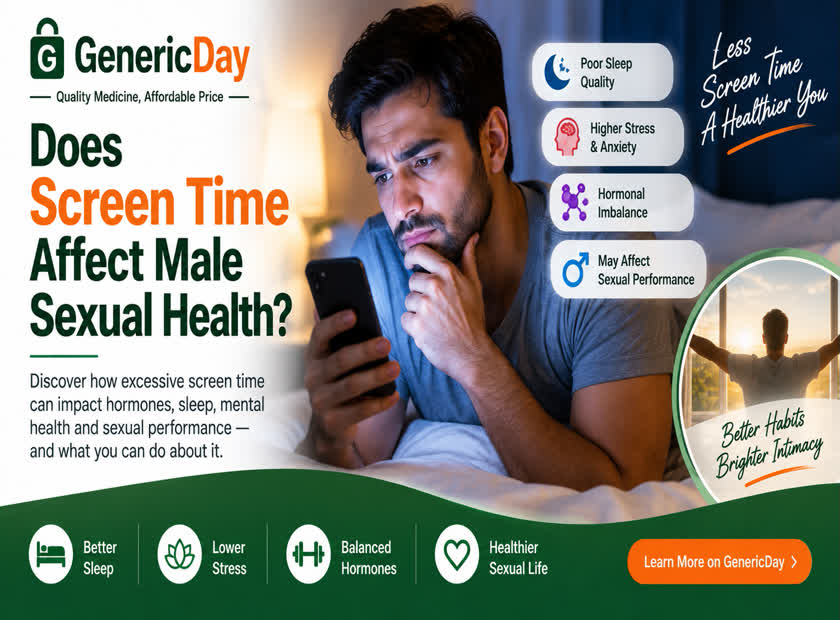
Does Screen Time Affect Male Sexual Health? What Science Says About Screen Time, Testosterone, ED & Fertility
Your phone may be sitting beside you while you read this, but could your screen habits also be affecting your sexual health?
For many men, screens are part of almost every hour of the day. We use smartphones for work, laptops for study, television for entertainment, and social media before bed. The problem is not simply the number of hours spent looking at a screen. When, why, and how you use screens can influence sleep, physical activity, stress, and daily habits, all of which can matter for male sexual health.
So, does screen time affect male sexual health?
The short answer is: it can potentially affect sexual health indirectly, especially when excessive screen use contributes to poor sleep, physical inactivity, weight gain, stress, or other unhealthy behaviors. However, there is not enough evidence to say that ordinary screen exposure directly causes erectile dysfunction, low testosterone, or infertility.
Research consistently links problematic screen use and bedtime screen exposure with poorer sleep, while sleep itself is relevant to erectile function and several aspects of men's health.
This article explains the relationship between screen time and male sexual health, including erectile dysfunction, testosterone, male fertility, sperm quality, sleep, sedentary behavior, and pornography use.
What Is Screen Time?
Screen time refers to the amount of time a person spends using digital devices with a screen, including:
- Smartphones and mobile phones
- Computers and laptops
- Tablets
- Televisions
- Gaming consoles
- Streaming devices
- Other digital screens
Not all screen time is equally harmful.
For example, using a laptop for eight hours because of work is different from spending eight hours scrolling social media, watching videos late at night, or gaming without taking movement breaks.
Therefore, when discussing excessive screen time and men's health, researchers increasingly consider not only duration but also timing, content, behavior, and what screen use replaces.
Does Screen Time Affect Male Sexual Health?
Yes, excessive screen use may influence male sexual health indirectly, but the relationship is more complicated than simply saying “screens cause sexual problems.”
There are several possible pathways:
Excessive screen time → less physical activity → poorer metabolic health → potential sexual-function problems
Late-night screen use → poorer sleep → changes in energy, mood, and sexual wellbeing
Problematic digital content → psychological arousal/stress → reduced sleep or changes in sexual behavior
Long periods of sitting → sedentary lifestyle → cardiovascular and metabolic risk factors associated with erectile dysfunction
Current evidence supports the relationship between screen use and sleep particularly well. A large systematic review and meta-analysis published recently found that each additional hour of daily screen time was associated with approximately 3–5 minutes less total sleep and a higher risk of short sleep.
The important point is that screen time itself may not be the sole cause. Its effects can occur because screens change other behaviors that are important for health.
How Screen Time Can Affect Male Sexual Health
1. Screen Time Can Interfere With Sleep
One of the strongest potential connections between digital-device use and male sexual health is sleep.
Using a smartphone or laptop late at night can:
- Delay bedtime
- Reduce total sleep duration
- Increase mental stimulation
- Expose you to evening light
- Encourage continued scrolling or gaming
- Cause notifications to interrupt sleep
The National Sleep Foundation's expert consensus review found substantial evidence connecting screen use, particularly around bedtime, with poorer sleep health, although the strength of evidence varies according to age, type of screen use, and mechanism.
A recent meta-analysis of 21 cohort studies involving more than 548,000 participants also reported an association between greater screen time and shorter sleep.
Why does sleep matter for sexual health?
Sleep is important for overall physical and psychological health. Research examining men's health has found associations between poorer sleep and problems such as erectile dysfunction and hypogonadal symptoms.
This does not mean that one night of scrolling will cause erectile dysfunction.
The concern is a repeated pattern:
Late-night screen use → insufficient/poor-quality sleep → fatigue and poorer wellbeing → potentially poorer sexual function.
2. Can Screen Time Affect Testosterone?
This is one of the most commonly searched questions:
Does excessive screen time lower testosterone?
The answer is not straightforward.
There is currently no strong evidence that ordinary screen viewing directly causes clinically significant low testosterone in healthy men.
However, screen habits may indirectly influence factors associated with hormonal health.
For example, excessive screen use may contribute to:
- Sleep deprivation
- Physical inactivity
- Weight gain
- Chronic stress
- Irregular daily routines
- Poor diet
- Reduced time outdoors and exercising
These factors can be more relevant to hormonal and metabolic health than the screen itself.
Some studies have investigated whether radiofrequency electromagnetic radiation from wireless devices affects male reproductive hormones, but systematic reviews have found the evidence to be inconsistent and limited by differences in study design and exposure measurement.
Therefore, it would be inaccurate to claim:
“Your phone screen lowers testosterone.”
A more evidence-based statement is:
Poor lifestyle patterns associated with excessive screen use may contribute to factors that can influence men's hormonal and sexual health.
Screen Time, Testosterone and Sleep: What's the Connection?
Sleep is particularly important because it sits between digital behavior and several aspects of men's health.
| Factor | Possible effect | Evidence interpretation |
|---|---|---|
| Late-night screen use | Delayed bedtime and poorer sleep | Relatively strong association |
| Poor sleep | Fatigue and poorer sexual wellbeing | Supported by men's health research |
| Physical inactivity | Worse cardiometabolic health | Established health concern |
| Excess body weight | Increased ED risk | Established risk factor |
| Direct screen exposure | Testosterone changes | Evidence remains uncertain |
The key takeaway is that sleep and lifestyle may be more important pathways than screen exposure itself.
3. Can Excessive Screen Time Cause Erectile Dysfunction?
Can too much screen time cause erectile dysfunction?
There is no good evidence that simply looking at a screen directly causes ED.
However, excessive screen use can be associated with behaviors that may contribute to erectile function problems.
Erectile dysfunction is usually multifactorial. Cardiovascular health, diabetes, obesity, medications, psychological factors, sleep problems, physical activity, and other conditions can all play a role.
Research on behavior-related erectile dysfunction identifies lifestyle and behavioral factors as important considerations in ED risk.
How sedentary screen use may matter
Imagine someone who spends:
- 8 hours at a desk
- 2 hours gaming
- 2 hours watching television
- 1–2 hours scrolling on a phone
That's a substantial portion of the day spent sitting.
If this pattern replaces regular exercise, walking and other physical activity, it may contribute to a sedentary lifestyle.
Physical activity is relevant to men's sexual health, and a recent systematic review examined evidence linking physical activity with male sexual function.
So the more useful question isn't only:
“Does screen time cause ED?”
It is:
“Is my screen-heavy lifestyle replacing sleep, exercise, and healthy behaviors that protect sexual health?”
What About ED Treatment?
If erectile difficulties continue despite improving sleep, exercise, and lifestyle habits, a healthcare professional may recommend treatment. Cenforce, which contains sildenafil, is a medication used to treat erectile dysfunction by improving blood flow to the penis during sexual stimulation. It does not treat excessive screen time itself, so addressing unhealthy screen habits and their effects on sleep and physical activity remains important.
4. Screen Time and Male Fertility
Another common concern is:
Can screen time affect male fertility?
Male fertility involves several factors, including:
- Sperm count
- Sperm concentration
- Sperm motility
- Sperm morphology
- Hormonal health
- Testicular function
- General metabolic health
- Lifestyle and environmental factors
Research has investigated the potential effects of wireless devices and radiofrequency electromagnetic radiation on sperm and male reproductive health.
Some reviews have reported possible associations, particularly involving sperm motility, while also emphasizing important limitations and gaps in the evidence.
This is an area where careful wording is essential.
There is a difference between:
“Phone use has been studied for possible reproductive effects.”
and:
“Using your phone causes infertility.”
The second statement goes beyond the evidence.
For men concerned about fertility, established factors such as smoking, obesity, excessive alcohol consumption, certain medications, heat exposure, medical conditions, and other lifestyle factors deserve attention alongside device habits.
5. Does Phone Use Affect Sperm Quality?
Searches for “does phone use affect sperm quality?” often focus on radiation from mobile devices rather than screen time itself.
These are actually different questions.
Screen time refers primarily to visual/digital-media exposure.
Wireless-device exposure can involve radiofrequency electromagnetic radiation.
Research has investigated whether wireless devices affect sperm parameters, with some studies suggesting possible effects but substantial uncertainty remaining because exposure conditions, devices, study populations, and outcome measurements differ.
Therefore, more research is needed before making definitive claims about everyday smartphone use and male fertility.
6. Blue Light, Sleep and Male Sexual Health
You may have heard that blue light from smartphones lowers testosterone.
That claim is too simplistic.
One established concern about evening screen exposure is its potential relationship with circadian rhythms and sleep.
Screens emit light that can influence the body's biological timing system, while engaging content can also increase alertness and delay bedtime.
A 2026 review discussing evening LED screen exposure notes that short-wavelength light can affect circadian signaling and melatonin, but also emphasizes that the overall sleep effect depends on factors such as actual light exposure, timing, and screen content.
So rather than focusing exclusively on blue light, consider the entire behavior:
Late-night scrolling + stimulating content + delayed bedtime + fewer hours of sleep
may be more meaningful than the blue-light component alone.
7. Can Lack of Sleep Affect Male Sexual Health?
Yes, sleep is an important part of overall male health.
Poor sleep can be associated with:
- Daytime fatigue
- Reduced mood
- Stress
- Poor concentration
- Reduced wellbeing
- Sexual-function concerns
Research reviewing sleep and men's health has reported relationships between poor sleep and erectile dysfunction as well as other male health outcomes.
This creates an important indirect pathway:
More nighttime screen use → less sleep → poorer overall well-being → possible impact on sexual health.
If someone is experiencing persistent erectile difficulties, however, sleep should not automatically be assumed to be the only cause.
8. Does Sitting All Day Affect Erectile Function?
A screen-heavy lifestyle can also increase sedentary behavior.
Sitting for long periods is not automatically equivalent to developing erectile dysfunction. However, a consistently inactive lifestyle can contribute to broader health problems.
Cardiovascular and metabolic health are closely connected to erectile function because erections depend on healthy blood vessels and adequate blood flow.
That is why reducing screen time alone may not be enough.
A better strategy is to replace some sedentary screen time with movement.
For example:
- Take walking breaks during work.
- Exercise regularly.
- Avoid sitting continuously for several hours.
- Walk while taking phone calls when practical.
- Spend some leisure time outdoors.
- Combine screen reduction with better sleep and nutrition.
9. What About Pornography and Sexual Health?
Pornography is a separate but relevant topic when discussing screen addiction and sexual health.
Not every person who watches pornography develops a sexual problem.
However, problematic or compulsive pornography use can become relevant if it:
- Interferes with relationships
- Causes distress
- Becomes difficult to control
- Replaces partnered sexual activity
- Interferes with sleep or daily responsibilities
- Is associated with anxiety or unrealistic expectations
It is important not to automatically label pornography use as the cause of erectile dysfunction.
Sexual function is influenced by biological, psychological, and relationship factors, and persistent ED deserves an appropriate medical assessment.
10. How Much Screen Time Is Too Much for Men?
There is no universal number of screen-time hours that automatically means a man will develop sexual-health problems.
Instead of asking only “How many hours?”, consider these questions:
- Is screen use reducing your sleep?
- Are you exercising regularly?
- Are you spending most of your day sitting?
- Do you use your phone continuously at bedtime?
- Is screen use interfering with relationships?
- Are you experiencing stress or anxiety because of digital media?
- Is your screen use difficult to control?
If the answer to several of these questions is yes, reducing screen exposure may be worthwhile.
The goal is not necessarily to eliminate screens. It is to create a healthier relationship with technology.
Signs Your Screen Habits May Be Affecting Your Health
Your digital routine may deserve attention if you regularly notice:
- Going to bed later because of your phone
- Feeling tired after waking up
- Spending most of the day sitting
- Skipping exercise because of screen use
- Checking your phone repeatedly during the night
- Using screens until the moment you fall asleep
- Losing track of time while scrolling
- Experiencing stress from excessive digital consumption
These signs do not prove that screen time is causing a sexual-health problem, but they indicate that your lifestyle may benefit from adjustment.
7 Practical Ways to Reduce Screen Time and Support Sexual Health
You don't need to throw away your smartphone.
Instead, focus on small, sustainable changes.
1. Create a bedtime screen boundary
Try stopping recreational screen use before going to sleep.
A consistent wind-down routine can make it easier to protect sleep.
2. Keep your phone away from the bed
This reduces the temptation to scroll and can make nighttime notifications less disruptive.
3. Take movement breaks
If you work at a computer, stand up and walk periodically rather than remaining seated for long uninterrupted periods.
4. Protect your sleep schedule
Aim for a consistent sleep and wake routine.
Sleep is a major part of overall health, and research consistently connects problematic screen habits with poorer sleep outcomes.
5. Replace, not simply remove, screen time
Instead of asking yourself to “use your phone less,” replace some digital entertainment with:
- Walking
- Exercise
- Reading
- Hobbies
- Social interaction
- Outdoor activities
6. Reduce stimulating content at night
Gaming, emotionally intense content, social-media arguments, and endless scrolling may keep your brain engaged when you're trying to wind down.
7. Pay attention to persistent sexual symptoms
If you regularly experience erectile dysfunction, low libido, ejaculation problems, or fertility concerns, don't assume your phone is responsible.
A healthcare professional can evaluate potential causes.
Screen Time vs Healthy Lifestyle: What Matters Most?
A common mistake is to focus on a single factor.
Male sexual health is influenced by a combination of:
Sleep + physical activity + cardiovascular health + metabolic health + psychological well-being + relationships + medical conditions + lifestyle choices.
Screen time can interact with several of these factors.
Therefore, the best approach isn't simply:
“Reduce your screen time.”
It is:
“Build a lifestyle in which screens don't consistently interfere with sleep, movement, relationships and healthy routines.”
What the Current Evidence Actually Says
The evidence can be summarized into three levels.
Stronger evidence
There is substantial evidence linking problematic or bedtime screen use with poorer sleep outcomes.
Plausible indirect relationship
Poor sleep, physical inactivity, and unhealthy lifestyle patterns can contribute to factors relevant to male sexual health.
Still uncertain
Direct claims that normal screen exposure causes low testosterone, erectile dysfunction, or infertility are not established.
Research into wireless-device exposure and male reproductive health remains mixed and has important methodological limitations.
This distinction is especially important for health content because correlation does not automatically establish causation.
Quick Comparison: Direct vs Indirect Effects
| Concern | What research suggests | Practical takeaway |
|---|---|---|
| Screen time & sleep | Greater/bedtime screen use is associated with poorer sleep | Reduce late-night recreational use |
| Screen time & testosterone | Direct evidence is uncertain | Focus on sleep, exercise and overall health |
| Screen time & ED | No established direct causal relationship | Address lifestyle and medical risk factors |
| Screen time & fertility | Wireless-device effects remain uncertain | Don't assume phones are the sole cause |
| Screen time & sedentary behavior | Heavy screen use can displace movement | Add regular physical activity |
When Should You See a Doctor?
Do not assume that every sexual-health problem is caused by screen time.
Consider speaking with a doctor if you experience:
- Persistent erectile dysfunction
- Significant or persistent reduction in libido
- Problems with ejaculation
- Concerns about fertility
- Testicular pain or swelling
- Symptoms suggesting hormonal problems
- Sexual difficulties that are affecting your relationship or quality of life
Erectile dysfunction can sometimes be associated with underlying cardiovascular, metabolic, hormonal or psychological conditions, so persistent symptoms deserve proper evaluation. Current European guidelines address ED, hypogonadism and male reproductive health as clinical conditions requiring appropriate assessment rather than self-diagnosis.
Frequently Asked Questions
1. Does screen time affect male sexual health?
Yes, potentially indirectly. Excessive screen use may affect sleep, physical activity, stress and lifestyle habits that are relevant to male sexual health. Direct causation between ordinary screen use and sexual dysfunction has not been established.
2. Can too much screen time cause erectile dysfunction?
There is no strong evidence that screen time directly causes ED. However, excessive screen use may contribute to poor sleep, sedentary behavior, and unhealthy lifestyle patterns that can influence erectile function.
3. Does excessive screen time lower testosterone?
Not conclusively. There is insufficient evidence to say that ordinary screen exposure directly lowers testosterone. Lifestyle factors associated with excessive screen use may be more important.
4. Can screen time affect male fertility?
Possibly indirectly, but the evidence is not definitive. Research on wireless devices and male reproductive health has produced mixed findings, and more high-quality research is needed.
5. Does phone use affect sperm quality?
Some research has investigated potential associations between wireless-device exposure and sperm parameters, particularly sperm motility. However, the evidence has important limitations and should not be interpreted as proof that everyday phone use causes infertility.
6. Does blue light affect testosterone?
A direct testosterone-lowering effect from ordinary screen blue light has not been firmly established. Evening screen exposure is more clearly relevant to circadian timing and sleep, although the exact effect varies by exposure and behavior.
7. Can lack of sleep affect male sexual health?
Yes. Poor sleep is associated with several aspects of men's health, including erectile and sexual-function concerns.
8. Does sitting all day cause erectile dysfunction?
Sitting itself should not be described as a direct cause of ED. However, prolonged sedentary behavior can contribute to an inactive lifestyle and poorer cardiometabolic health, which are relevant to erectile function.
9. How much screen time is too much for men?
There is no single evidence-based number that automatically defines unhealthy screen time for every adult man. Consider whether screen use is interfering with sleep, exercise, relationships, work, or daily functioning.
10. How can men reduce screen time and improve sexual health?
Start with practical changes: reduce recreational screen use before bed, protect your sleep schedule, take regular movement breaks, exercise regularly, maintain a healthy weight, manage stress, and seek medical advice for persistent sexual symptoms.
Conclusion: Is Screen Time Bad for Male Sexual Health?
So, does screen time affect male sexual health?
The answer is more nuanced than a simple yes or no.
There is growing evidence that excessive or poorly timed screen use can interfere with sleep, physical activity, and healthy daily routines. Sleep is particularly important because poor sleep is associated with several aspects of men's health, including sexual and erectile-function concerns.
However, it would be misleading to say that watching a phone or computer screen directly causes erectile dysfunction, low testosterone, or male infertility.
The bigger issue may be the lifestyle surrounding screen use.
If your phone keeps you awake until 2 a.m., prevents you from exercising, encourages hours of sitting, and increases stress, then the overall pattern could potentially affect your health, including your sexual well-being.
The best strategy is therefore not to fear technology. Instead, create healthy boundaries around it.
Protect your sleep. Move your body. Manage stress. Maintain cardiovascular and metabolic health. Take breaks from sitting. And if you have persistent sexual or fertility concerns, get them medically evaluated rather than blaming screen time alone.